Showing posts with label traditions. Show all posts

Wednesday, June 24, 2015

Mesa Dress and Father's Day


I'm a bit annoyed with google right now, I must say.  I wasted a ton of time this afternoon trying to sort out some settings that seriously messed up my blog for a few hours (apologies to anyone who tried to access it earlier today and found it to be totally absent of all images).  I finally figured out what the problem was, and then spent a bunch more time trying to fix it, and I think it is all sorted now.  I was ready to cry at a few points, though.  Not cool, google.  Not cool.


So let's talk about pretty dresses instead, okay?  I made this dress at the same time as the chambray dress, and cut it almost exactly the same, except for the neckline shape.  The fabric is Cotton + Steel, from their Mesa line, and I really like it.  (I'm particularly pleased with the top stitching on the pocket line, even though it isn't very visible at a distance.  It is the little things.)


 It has that closet staple feel to it.  I spent last week visiting my parents in the Midwest, and just took five dresses to wear for the week, including this one and the chambray that I wore on the flight out (it wore like a champ, and was the perfect traveling dress)


I saved this dress for Father's Day, and took some photos in my parents' backyard.  My parents live just outside of town, and their property backs up to a creek.  The day we arrived, it rained like crazy, and kept raining for several days after, so the creek was pretty full and the mosquitoes were out in force.  


It was very hot and humid on Father's Day--I was glad to get back into the air conditioning after I took these photos!  The girls slept great the whole week, and I made a (small) dent in the massive sleep deficit I've acquired these past few years.  It was a good trip and I'm sort of sad to be home.


 In retrospect, I wish I had done two things differently.  I wish I had eliminated the waist seam and cut it all in one, because there is a bit of wonkiness in the pattern placement around the waist.  I also wish I had paid a bit more attention to pattern placement on the front bodice--the pattern repeat includes a small section of black triangles that read as a blank spot at a distance, and I ended up with one of these sections in the middle of my front bodice.  Oops.  It does work well for pendant necklaces though!


I made a longish soft sash, and tied it around twice, but I have at least four leather belts in various colors that will coordinate with this dress as well, so I can change up the look.  I have several cardigans that will coordinate for cooler weather as well, and I think it will look quite nice with my lace up boots in the fall. It really is a quite versatile dress.  


My only complaint about cutting the skirt a bit narrower is that I have less room to grow as the day wears on--by the time I went to bed that night, my middle had belled out so much that I looked 7 months pregnant.  I took a picture at 11 p.m. and another at 9 a.m. the next morning, just to reassure myself that the constant up and down isn't all in my head.  I'm seeing a specialist tomorrow, and am hoping she can give me some help with all the issues I'm having.


Since this was the first time in about 12 years that we were all home for Father's Day, we made sure to take some father-daughter pictures on the front porch.  This one was my favorite.


I don't remember the last time I had a photo like this with just my dad.


We returned home yesterday, and Birdie pretty much whined the whole flight (and nothing is guaranteed to make my hair stand on end like whining), and then we had a long long cab ride home because a terrible storm hit while we were driving.  Rain just absolutely lashed down and the wind was fierce.  Lots of thunder and lightning--I almost wondered if we should even be in a vehicle, but the alternative was waiting on a train platform that would be open to the elements and then trying to get the bus. I heard there was a tornado in the next county over.  The sky was quite green here.  I had to empty almost 6 inches of water out of the previously empty pool this morning!  Our neighbor lost a big branch off the tree in front of their house and it is leaning on a power line (not ours, thankfully).  The storm also seems to have broken the terribly humidity that has hung over the city for the last few weeks.  It is warm, but not unbearable, and the house has stayed a reasonable temperature for most of the day, so I'll take it!

Outfit details:
Mesa Dress: Cotton+Steel Mesa in Navy fabric (from fabric.com), frankenpattern dress
Earrings and necklace: etsy
Shoes: Naturalizer via ebay

Tuesday, December 23, 2014

Talking Tuesday: Anuna

I have another Talking Tuesday post in the hopper for more reflective times, but today I wanted to share a new-to-me Irish choral group called Anuna and their fantastic rendition of Gaudete.  I really like their performance outfits too.  I immediately purchased their Best Of album after hearing this piece, and bought their Christmas one too.  The group's diction is superb and choral arranging is very tight.  If you like choral music and traditional Irish singing, this is a great group to try out!

Wednesday, August 27, 2014

Yarn Along

Birdie is three!  
If you saw her as the sickly baby that she was, you would hardly believe the firecracker that she is today.  She still has her health problems and we really only get a break of a few weeks every summer before the cycle of sickness and respiratory crisis starts again with her and her older brother, but every year has been a little bit better, so that is something.  We've gotten fairly adept at managing her condition, and her medication schedule is much easier than when she was a baby.  

She is my climber, and daily scares the pants off me with her daredevil antics.  She has started in with the challenging three-year-old behavior already, but she is also incredibly funny and articulate, which does help matters a lot.  She starts preschool next week, and the teachers have been warned.  :)

She loves classic Sesame Street and Mr. Rogers and just about anything read to her.  She gets on particular book kicks and wants them read over and over again.  (Currently her favorites are Curious George and the Pancakes and Dinosaur's Binket, but she has cycled through The Best Nest, PJ Funnybunny, We're Going on a Bear Hunt, Katie Morag's Island Stories, The Monk Who Grew Prayer, and Mr Brown Can Moo)  She remembers songs that are sung to her once, and has a pretty good ear for sounds and letters and numbers.


In other news, sleeve progress.  This is the second sleeve, and I'm done with the increases.


I'm still poking away at Peter King's book, but it is pretty dense, so it is slow going.  I really think he has something important to say, and I'm trying to understand it all, and really take it in instead of rushing through it.


And some cards!  I've not stamped in ages, and it was nice to get everything out and make a few cards this morning after cutting out a blouse.  I CASED (copy and share everything) all these from others, but changed a few elements here and there to make them my own.  I printed off pictures of the cards I wanted to CASE, and worked off the printed sheets.  I think I might do this regularly, as it kept me focused, kept the overall crafting session limited to a few cards, and was still enjoyable.
 I certainly have a big enough idea file and enough supplies on hand to do this a few times a month.


The vellum butterflies on this card make it for me.  It is for my son's godfather and his new wife; we attended their wedding on Sunday but in the chaos of the trip, I neglected to bring a card, so I'm sending it now.  I figure I have a year, right?


My goddaughter and her husband are celebrating their anniversary this week and I usually forget until the last minute, so this will probably be a bit late.  I'm quite pleased with how it came out, however.  I just stamped the images, colored with a white crayon (I tried a chalk marker first on scrap, and it didn't show up well), added a little Pear Pizzazz marker on the leaves, blended again with crayon and Bob's your uncle!  


This card was CASEd from Jan Tink, and I really just changed the colors and the ribbon.  She used in-colors, I think, and I used what I had, which was Marina Mist, Crushed Curry, Soft Sky (for additional shading) and some purple dsp that I dirtied up with Early Espresso.  Marina mist ribbon to finish.  This card is a thank you for the occupational therapist who has been treating Birdie for the past few years through Early Intervention, and since Birdie is three, will no longer be able to see her.  Fortunately, Birdie is doing so well that she didn't qualify for renewal in the next stage of the program!


Finally, this one is based on a card from Julie Davison.  I think she CASEd the catalog.  I changed the colors and the stamps, but the basic idea is the same.  I almost scrapped this one halfway through, but I'm pretty happy with how it turned out in the end.  I always seem to need thank you cards.


The circle flap keeps the card closed, which I think is a neat feature.


I'm also not generally one to make little fiber bundles as an embellishment, but I like how it turned out on this card.


Thursday, July 31, 2014

Odds and Ends, Vol. 11

Good Badlands: Dry Terrain of the American West Captured in a Brief Moment of Color by Guy Tal nature landscapes flowers deserts
Via

The War That Changed Everything.  The Wall Street Journal reflects on the impact of the Great War.  Consider this article a good primer to understanding the modern and post-modern landscape.

Meagan Francis addresses some tricky parenting dilemmas for older kids.  My kids have a few years (I hope!) before these things become an issue, but I'm going to keep this article in mind as we hurtle along.


Nathan Bieberdorf puts paid to the notion that everything is beautiful.  There is much in life that is valuable above physical attributes, and frankly, not everything in life is beautiful.  There is much ugliness and sorrow in the world.  From the article: 

"Because we have created a culture that values beauty above all other innate traits…for women, at least. Men are generally valued by their success, which is seen as a result of talent and hard work, despite how much it depends on luck and knowing the right people.

But women are pretty much a one-note instrument. Society says, you’re hot, or you’re not. Your looks affect your choice of mate, the friends you have, and even your job. And this factor that will affect every part of your life is something you have next to no control over."


Sally McGraw at Already Pretty discusses how to define your body (or, as I've said before, appreciate your body's own particularities; it is so much easier to find or sew clothes that fit and flatter if you are comfortable with your own skin and familiar with your particular shape and proportions)

I've noticed this trend in the last few years of women plasticizing themselves, partly (I think) in response to the preponderance of Photoshopped, airbrushed magazine ideals.  I loved this video response by singer Colbie Callait.

Sarai reflects on the 3 biggest joys of sewing.

The Rule of Three for keeping wardrobes functional and small.  I'm definitely using this rule going forward.

Without the devil, without sin, there is no reason for salvation, no reason for Christ to save us. The Church of England seems to have forgotten this basic fact.

A plutocrat warns against modern day peasants storming the castle.  Hanauer's thoughts on employment, wages, and economics are fascinating, particularly coming from someone as ultra wealthy as he is. (Also, Rod Dreher has a nice response to the article, along with a good reflection on folly in society)

Philip Bess might just be my new favorite intellectual.  He is a New Urbanist, and his thoughts on sustainable community in the 21st century are spot on.  I particularly appreciated his thoughts on the role of the Church in creating community around itself, rather than asking the community to come toward it.  Christ comes to us;  the chalice proceeds from the heavenly altar, all we need do is approach with fear and trembling.  

On the other hand, one of the reasons I love being an historian is that I like to imagine life as it was before, and imagine myself back in that life (this is one of the primarily reasons that Outlander strikes a major chord with me).  Turns out, I could be living the medieval dream.  Oh, don't tempt me.

Via
I love this: 50 photos of motherhood in the mid-20th century.  Further proof (as if we needed it) that women come in all shapes and sizes, and how mothers interact with their children remains unchanged.

Every time I go to IKEA, I get visions of compact, simple, streamlined aesthetic in my head.  Those showroom apartments where every square inch of that 700 square foot apartment is utilized, and livable for a family!  The 100 square foot studio apartment with no wasted space.  So cozy, so compact, so useful!  But then I get home, and see the realities of my Victorian-era row-home, and realize, the Scandinavian modern aesthetic isn't going to work here.  But I can dream!  This slide show takes me away.

Alan Jacobs reviews Jonathan Haidt's Righteous Mind.  Haidt is a leftist secular scholar, but he understands how institutions bind us together, make us feel morally superior, promote group-think, and also prevent good dialogue between opposing sides.  Jacobs nicely summarizes Haidt's arguments.

This article deals with a question that is often on my mind: waste.  Specifically, textile waste, as fast fashion has ruined the textile industry, garments aren't made to last, and the consumer mindset of modern society pushes us to buy ever more clothing (the average American buys 70 pieces of clothing per year!)  All that clothing tends to cycle in and out, as fashion trends change quickly these days, and garments are designed to wear out in three washes (!!!).  I wish more companies would get involved in textile recycling in America, as I think there is not only big business there, but it would at least be a buffer of sustainability in a sector of the economy that seems little concerned with the environment.  The first step, obviously, is to consume less, but I get that it is hard when garments are poorly made and wear out easily (even the ones from so-called "good" brands are no longer as well made as they were even 15 years ago).  I do donate almost any clothing we aren't using anymore.  I consign whatever is in good shape to ThredUp, and donate the rest to a local charity, where I presume a lot of it is recycled.  I haven't done as well with garments that are beyond the pale (mostly clothing from my husband, who wears things completely dead), but this article makes me think I should just be donating them as well, marked for textile recycling.


Caroline Vuyadinov discusses the body after death--it is not disgusting, or a casing to be discarded, but the housing of the soul, and should be respected, and buried properly.


Dreher was on a roll there for a few weeks, and this article caught my eye: why hard news is like eating kale. From the article:

"The ugly truth is that people consume news like my kids consume food: they hate anything that might be remotely challenging or unfamiliar, and all things considered, they’re rather eat sweets than meat or vegetables."


Or hollow out an old book.
Via

Ingenious ways to hide the "ugly" in your house.  I don't actually think most of these suggestions are practical, or even that attractive (hello, dog bowls in a drawer.  Ick), but some are clever.  I also think that we don't need to hide the "ugly" in our homes--we live there, they don't need to look like an unoccupied magazine spread.  That said, there are plenty of practical reasons to tie up cords, hide them behind things (to keep Small People out of them, for example), and some of the ideas listed are useful.

And related: A manifesto against the tyranny of luxury kitchens.  Yes.  Exactly.  Give me small, functional, and perhaps ugly or dated to empty, unused, expensive showpieces.

Bigger is better, when it comes to managing a family.  

As the mother of four small children in a child-hostile urban setting, I've received my fair share of weird comments over the years.  Wendy Jenssen hilariously responds to the most common (and sometimes bizarre comments she receives).  Also, Scary Mommy skewers them all.  Just.don't.go.there, mkay?

I'm not militant about breastfeeding, but I do think that women should feel free and comfortable to discreetly breastfeed in public.  Julia Wykes' story made me sad about the whole thing.


In an older article, Frederica Mathewes-Green discusses the pros of (wed) teen pregnancy.  The key?  A supportive surrounding community.

20140707-084248-31368747.jpg
Via
Have I cracked on enough about Outlander yet?  No?  Good.  Here are the reasons we care about Claire (the main protagonist of the series).  Series premier on August 2!!  First episode is free on Starz.com--I can't wait!!

Our society is profoundly uncomfortable with, well, discomfort.  Anything that isn't shiny or pretty, or fit into a nice category is hard to deal with, and grief or personal tragedy is no respecter of persons.  I found this  little infographic a useful way to think about how to help when life gets tough, and what not to say.


"In the modern world of shiny blogs and perfect Instagram photos and everything we want when we want it, there is a great fiction that we can control everything around us, so that we’ll never experience discomfort. According to modern society, discomfort is the worst thing that can happen. But parenting little people will involve difficult, sometimes painful stuff. Most of it is amazing, wonderful and unimaginably fulfilling, but not a small amount of parenting is dealing with challenges you have no way to prevent. Stomach bugs happen. Tantrums happen, mostly in public places. Sleepless night HAPPEN, oh those sleepless nights. Parenthood comes with a higher level of discomfort than almost anything else you’d willingly choose. Our society asks the question, why chose parenthood if it sucks so much?" 

Yes, exactly.  But, as she notes, parenthood is filled with much joy and love that balances out the discomfort, the sleep-deprivation, the anxiety, the agony.  It is good for our souls to choose things that are difficult, things that are uncomfortable, things that hurt.  Sometimes we can grow and change no other way.

Tuesday, July 8, 2014

Talking Tuesday: Louis Markos and Dante

Rod Dreher has really been killing it lately, and I'm probably going to be featuring a bunch of posts from him in my next Odds and Ends, but the introduction to his post on Dante yesterday really resonated with me.  I started out as a medievalist, and I think, in our ahistorical modern mindset, that it is easy to forget how people viewed the world for many generations prior to the Industrial Revolution and the skepticism that accompanied the Enlightenment.  Personally, I think something very important has been lost, and I'd be interested in a discussion on how to reclaim it.


"Dante, along with his fellow medievals, lived in a sympathetic universe that was fraught with meaning and purpose. The stars were not dead and cold, cut off from the lives of men; their positions and movements rained down influence on the Earth, even as great upheavals in the earthly realm were reflected and broadcast in the heavenly. The medievals, like the ancients before them, referred to the universe by the Greek word kosmos — a word whose root meaning is “ornament” (as in our modern word, cosmetics). The cosmos was considered by ancients and medievals alike to be ordered and harmonious, because it was created by a God of order and harmony. It was, in fact, God’s ornament. Both humanity and nature were part of God’s cosmic order and harmony, and thus it was only natural that the two should exist in sympathy with one another. Dante’s universe did not simply exist; it meant, and it meant intensely. The universe was less a thing to be studied than a poem to be loved and enjoyed."

~Louis Markos, Heaven and Hell: Visions of the Afterlife in the Western Poetic Tradition. New York: Wipf and Stock Publishers, 2013, quoted in Dreher.

Monday, May 19, 2014

Odds and Ends, Vol. 9

I've got another great line up of articles for you, and it has been so nice to hear from several readers that you are enjoying these links!


Sarai at Colleterie has been collecting links on simple life and finding contentment in the everyday, and I found this article on the medium chill to be a useful perspective, particularly as I'm a satisficier in some areas of my life, but a perfectionist in others.  Equally intriguing is this short piece from The Nife En L'Air that pokes holes in our ideas of simple living (hint: it's not an aesthetic, and it's not necessarily something you can easily Pinterest).

Mat. Anna posted a short story a while back, and I found it such a useful way to think about saying the Jesus Prayer.

Amazing color photographs of pre-revolutionary Russia.  The color makes them seem contemporary and close enough to touch.

444rusrur.jpg
Via

Rod Dreher ponders the collapse of the American family in the last 40 years.  What is especially interesting is reader Anastasia's comments included at the end of the piece.  Indeed.

Ivan Plis writes about the dangers of seeking Christ through the internet instead of by living the life of the Church and the liturgical cycle.  I've encountered this phenomona many times over the years, and it is still worth repeating: The best way to learn about the Orthodox Church is to live it; go to the services, participate in the cycle of fasting and feasting, pray the prayers, read the Fathers (not online!), go to monasteries.  This is the way of discipleship.

Also in First Things, John P. Burgess writes about the modern Russian Orthodox Church, and the complex legacy of the Soviet period and how that is being worked through today.  From the article: 
"But the story of the Church’s rebirth is more complicated than Western analyses suggest....The biggest impediment to success is Russians’ low rate of active participation. Although as many as 70 to 80 percent call themselves Orthodox and have been baptized, only 2 to 4 percent regularly attend the liturgy. Even fewer keep the Church’s fasts. Still, sociological surveys have established that Russia is one of the few places in the developed world where people report that religion is becoming more important to them, not less. I am constantly surprised by Russians like my friend Tanya. A well-educated and professionally successful Moscow resident, she questions the existence of God, never attends church services, and doesn’t even know the Lord’s Prayer, yet makes pilgrimages to remote Orthodox monasteries, where she says she experiences a holy world that fills her with utter joy and peace. For her, a low rate of everyday participation clearly does not contradict a high degree of affective affiliation. The Church believes that the explanation is both simple and powerful: Orthodoxy helps Russians understand who they are as a people and what makes Russia unique among the world’s nations."

Via

An Atlas of True Names: this is quite interesting, as it identifies place names by geography and history, rather than a random name.  For instance, Ohio is called the Land of the Large Creek, and Pittsburgh The Pit-Dweller's Town.  I'm geeking out over here.

Kelly Flannagan talks about how our cultural American Protestant work ethic might lead us to teach the wrong lessons about what is important to our children.  I think he gets at something important, which is, yes, you can accomplish many things through hard work alone, but there is a cost to doing hard work at the expense of everything else in your life.

I found these paintings of the sea by Samantha Keely Smith oddly mesmerizing.

Internal Landscapes: Sweeping Abstract Oceans by Samantha Keely Smith waves water painting abstract
Samantha Keely Smith

The Farmer's Wife offers a useful corrective to us mothers who feel pressure to do it all, be it all.  In short? Prioritize your children's hearts, be very selective about what you read about parenting on the web and in books, don't be your children's primary entertainer, and define your own fun.  All good rules to live by, and most of her guidelines are things we are trying to do at our house as well.

"This avalanche of information about everything and anything has turned all of us into information junkies. We constantly check our phones waiting for the next piece of news or conversation to pop out. We live and breathe information. There is only one downside to this addiction, we start having less and less time. Paradoxically, when we can find anything quicker than ever, we end up having less time than ever. Work doesn’t get finished, conversations, unless virtual, are on the brink of extinction, human interactions are a bare because they take you away from the urge to know everything right now!"  I'm still working on balance with my computer use, and I find it a tricky line to walk, because I have a lot of social interaction online that I wouldn't get anywhere else, and I do a lot of our household shopping online, but I'm trying to be more mindful when I'm online, and ask myself, am I here to create, to work, to contribute?  Or am I here to numb, to tune out, to ignore my life?   If the latter, I try to turn off the computer and do something else.


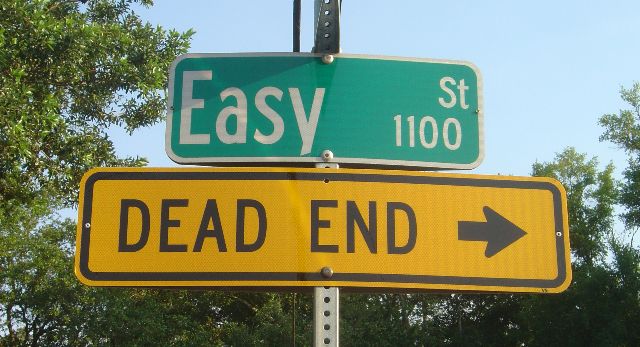
Sometimes, I think Christy lives in my head.  I'll be thinking about writing something, and then she goes and says it better than I ever could!  A few weeks ago, she wrote a quick take (#2) about how searching for "easy" in every day life can be a pitfall.  It is something I've been thinking about a lot lately too--I think we do a disservice to the hardships of life by constantly praising and seeking out that which is easy.  There is much in life that is hard, and while I don't think we should seek out hardship for the sake of it, neither should we ignore difficulty, or pretend it doesn't exist, or that there isn't something spiritually useful to working through hard things, or learning how to master a skill that is difficult.  I think there is more to say on the topic, but I'll leave it there for now and perhaps revisit it soon.  


I seem to be stuck on images of the sea lately.  This photograph is amazing.

Jem Cresswell

I started out my history career in the medieval period, and so I'm always drawn to articles and stories from that time period.  I found this myth-busting article about the Crusades to be so illuminating, especially for our current relationship with the Muslim world.  Turns out, what goes around, comes around.  But then, we knew that, didn't we?

Via

Finally, Rod Dreher continues with an ongoing theme of storytelling with a brief post.  At some point, I need to parse this out, as it is a theme I think about a lot: who I am, how the stories I tell about myself are influenced by what others have told me, how my thoughts about who I am are shaped by those stories, etc.  I read a fascinating book a few years ago that raised a lot of these questions for me called What Alice Forgot.  Stories have a tremendous ability to define us, to narrate our lives, and the stories we tell and how we tell them are important.  

In a related note, we are entering the great big world of audiobooks for kids, and having listened to Danny Kaye's fabulous retelling of several lesser known fairy tales ad nauseum, we have discovered the wonderful storytelling of Jim Weiss.  We listened to his narration of King Arthur's Knights on our way to church yesterday, and after church, I went on Amazon to find more of his recordings because he is a wonderful storyteller!  We also ordered the first Adventures in Odyssey, as I remember those stories from my own childhood, and remember them being entertaining for adults too.  We have several car trips planned this summer, so we need good listening material--the kids are so quiet when there are stories on!!

And two more:

Gracy Olmstead writes about not idealizing pastoral over place, and in an excellent linked piece, also compares Thoreau and St. Benedict's approach to simple life.  Skip Waldon Pond and go for Benedict, I say.  There is so much I want to say about these two articles, but I'll save it.  Just read them!!

Friday, March 28, 2014

Balance Land: A Magical Place

"I'm trying to find more balance in my life."  I hear this phrase bandied about a lot these last few years, and yet it seems like very few people ever arrive at that magical land, Balance Land.  The place where our work and our personal lives flow harmoniously, and real life doesn't intrude to, you know, unbalance us.  I admit to the allure of the phrase: balance sounds so peaceful, so lovely, so attainable, just over that hill there.  If only I...  At the same time, I find the word to be rather blurry around the edges, the concept ephemeral and difficult to encompass.

Via

I'm finding the word discipline to be quite useful to me lately.  Discipline is a hearty word, with strong edges, and a useful definition that I can return to again and again.  Discipline, in short, means setting limits.  Positive and negative limits, but limits.  It means saying yes and no.  It means saying not now.  Mostly it means sticking to those limits, which can be hard in a culture that doesn't value limits.  Work harder, go faster, accumulate more things, see the world, read more, and on and on.  

Via
I'm starting small, because I tend to be that person who pushes harder, works longer, dives in headfirst and only comes up for air after touching bottom.  I think discipline helps to avoid extremes, which is good for everyone in my family, including me.  My first acts of discipline have been in the food arena, as I set some limits on what sorts of things I would and would not eat during the Great Fast.  There are, of course, specific prescriptions for this sort of thing, but given my limits, and the advice of my confessor, I can't follow the letter of the law without endangering my health.  But neither does that mean that I should not strive for food discipline in my life, just because I can't follow the specific fasting rules of the Church.  I won't go into the specifics of my food discipline here, because it is between me and my confessor and God, and I don't want anyone else to take my rule as advice without the guidance of a spiritual father or confessor, but I will say that I'm finding my current limits to be attainable, yet push me a little beyond my comfort zone.  A good discipline, so to say.


The other area that I'm experimenting with discipline is in my sewing and crafting.  I struggle with this a lot, as I like to dive into projects, and keep working until they are finished or I can't stay awake (sometimes I keep going even beyond that--it isn't healthy).  I get frustrated with interruptions, my children get frustrated with my inattention, and then I feel like I'm not getting time to pursue my blue flame.  For me, discipline in this area has been to set aside specific days and times when I work, and put up with a certain amount of interruption during that time, and then put everything away at the end of that time, no matter where I am in the project.  The last few weeks, I've been sewing on Monday and Thursday mornings, from about 8:30 until Birdie is ready for her lunch.  I do my cutting on Mondays, and if I have time, I sew, but otherwise, I set it aside until Thursday.  The discipline to set aside an unfinished project has been good for me, but difficult.  


I used to think that the purpose of routines like this were to free time for other things later, but now I think that the real purpose of routines is to train the mind and the body toward order.  I still spend too much time in front of a screen (in part because Ponchik wants to nap in my lap all afternoon), but I'm trying to be more efficient about my screen time and use the time when I really am trapped in a chair with Ponchik for hours to do computer work, and put the computer in standby the rest of the day.  The most well-ordered place I've ever been was in a monastery, and so I'm trying to remember the ways of the monastery when I want to fight against my discipline, against my self, against my sinful nature.  It is in this way that monasteries are so helpful and useful to lay people--monasteries demonstrate good order in a life oriented to God. (Edited: I realized after posting that the earlier version of this line might be confusing to my Protestant readers.  I hope the edit helps clarify matters)


This is a slow process, and I still rebel on some level at setting limits for myself, but the gift of this Lent for me is to see discipline as part of the spiritual struggle for good order and routine.   

Saturday, March 1, 2014

Beauty from Ashes

I hope this ramble-y little post makes some sense.  I've come down with another lung infection and had a killer migraine yesterday, so I'm not sure how well I was able to articulate myself, but 7 posts in 7 days waits for no man, so here you go!

Dostoevsky wrote that beauty will save the world (The Idiot).


When we went to Austria in the summer of 2012, I rediscovered some parts of myself I thought were lost when we visited Salzburg.  I wrote a little about that journey here, but mostly I discovered that I need beauty and goodness in my life in order to have some sense of peace.  A lot has happened since then, and I confess that I've forgotten some of those very important lessons.  There is much in city living that ugly, dirty, and depressing, and it can be very easy to slip into forgetting to see the forest for the trees.  There is also much to like about living in the city--this winter would have been much more difficult for us if we had been living in the suburbs or somewhere more rural.  So even though my basic vision of the beauty in creation involves isolated rural landscapes, I'm trying to adjust to the urban reality of my daily life.  And that landscape has its own sort of beauty; one must look harder to see it.

I think one of the first things that people notice upon entering an Orthodox church are the externals of it--the physical space is designed to engage all the senses, and the iconography, the incense, the music, the candles, the chanting, etc. are all part of that.  It is to remind us of heaven, and the heavenly cloud of witnesses that surround us always, to relive the creation and salvation story through the liturgy, to point our minds and hearts to worship God and to pray for the salvation of our selves and the world.

When we first moved to this part of the country, we were underwhelmed by many of the local churches, particularly the iconography, which was heavily influenced by the Romanticism that overtook Russian iconography in the late 19th century.  It seemed so at odds, both liturgically and aesthetically, with the traditional Byzantine style iconography to which we were accustomed.  I myself studied iconography with the Prosopon School, and learned the Rublev method, which is fairly contiguous with Byzantine styles.  Aesthetics mean a lot to me, and speak to me in visceral ways, so to find so much of the iconography of the churches to be of a distinct Western style, full of sentimentalism, was disappointing. Lately, however, I find myself revising that opinion, as I think those 19th century images have much to teach me about beauty, and about a window on the soul.

Nizhny-Novgorod-Church-of-Our-Merciful-Saviour-C0278
Merciful Savior Church, Nizhni Novgorod, Russia
A few weeks ago, I had the very rare opportunity to attend a Saturday Vespers by myself.  I went to the Russian parish that is an easy walk from our house, and entered the candle-lit darkness of the nave.  It was womb-like, even though the church was cold.  The fragrance of incense lingered on the air, and the brass candle stands, the gold on various icons, the threads of the analogian covers all sparkled in the low light.  I breathed a deep sigh, and felt something go out of me, a pressure that lives on my shoulders most days.  I was transported back to my first experiences of the Orthodox Church in Russia, and to the sure conviction I had upon entering that God dwelled there.

The church in which I spent the most amount of time in those days was in Nizhni Novgorod, a city about seven hours east of Moscow.  The church was not large, but very old, and filled with iconography, both painted frescos and murals, as well as loose mounted icons.  Being Protestant, and having no sense of the history of iconography, those 19th century sentimental images seemed quite familiar to me.  They were similar to the ones I'd seen in Bible story books growing up, and were reassuring.

Inside-Church-of-Our-Merciful-Saviour-Nizhny-Novgorod
Merciful Savior Church, Interior, Nizhni Novgorod, Russia
We could have a discussion about the theology of these Romantic-type icons, but I don't think that is worth going into here.  The point is, how do these images help me to focus my mind on God, to journey to salvation, to imitate Christ?  I'm not sure I could articulate exactly how they do, but they do.  I feel movement in my soul when I'm surrounded by beauty, and it pushes me to prayer, to examine my worldliness, to understand the myriad of ways in which I fall short of the glory of God.  I understand more viscerally how deep the thorn in my wounded soul, and how impossible it is for me to draw it out myself.

I will pursue beauty.  I will look for the beauty beneath the mask of ugliness and sin, I will try to look past the spiritual sickness of the world and see the creation of God.  I will remind myself (again) of my purpose in this life.  I know I will stumble, I know I will fall, and sometimes, it may take me a while to get back up again, but as I journey to the Cross this Lent, I will remind myself of my need for salvation.

A blessed Fast to us all, and forgive me, a sinner.

Tuesday, February 18, 2014

Talking Tuesday: Robert W. Jenson

This is an older article from Robert Jenson in First Things, and nicely parses out why the postmodern mind is so different from the modern and pre-modern mindsets. Mostly, he says, we've lost our sense of place in a larger cultural narrative that moves in a straight linear fashion, as with Aristotelean plot structure. It was, until fairly recently, the way the West understood itself as a cultural matter. All that changed with the Great War at the start of the 20th century, as people lost faith in the old ways and lost touch with traditional cultural understanding and narrative. The disillusionment wrought by the Great War on Western culture cannot be overstated. Jenson also then discusses the difficulty of addressing the Christian message of salvation to a mindset that does not understand contiguous narrative, nor of how one might fit oneself into a larger cultural narrative. A theme I shall continue to think on.


"For the ancient church, the walls of the place of Eucharist, whether these were the walls of a basement or of Hagia Sophia or of an imaginary circle in the desert, enclosed a world. And the great drama of the Eucharist was the narrative life of that world. Nor was this a fictive world, for its drama is precisely the “real” presence of all reality’s true author, elsewhere denied. The classic liturgical action of the church was not about anything else at all; it was itself the reality about which truth could be told."

~Robert W. Jenson, How the World Lost Its Story, First Things, October 1993


Friday, December 20, 2013

7QT: St. Nicholas Edition


Phoning these in like Jen, because it is 2:02 on a Friday afternoon, Birdie is upstairs yelling in her crib, and most definitely not napping, the baby is sleeping on my lap, I'm STILL sick, and well, it is Friday.

--1--

My small table topper tree, since we can't manage a full-size one with the kids just yet.
Thursday was St. Nicholas Day, so I put up our Christmas decorations on Wednesday, as planned.  I scaled back my decorations this year, and didn't put up our ornament garland, which is usually the majority of my decorating effort.  I did get the Nativities up, and my tiny table-topper tree is on my craft desk, plus a few other touches here and there.  So it feels festive, but wasn't too much work.  

Coins in shoes, gifts from St. Nicholas!

A book each, and a Fireman Sam shirt

--2--


So this year is set to be the Fireman Sam Christmas, as both boys are super into Fireman Sam.  Haven't you heard of it?  I'm sure not.  It is a little Welsh cartoon that Netflix started offering to stream sometime this summer.  It is cute, and not too annoying, and has inspired hours of pretend fireman-play this fall.  I bought the boys some Fireman Sam story books earlier this fall and those have been almost nightly requests.

--3--

Station Officer Steele
The funny part is that my husband has never seen the show, and has the Station Officer Steele accent down pat.  Thursday morning, after the boys had put on their new shirts and eaten breakfast, as my very serious husband was trying to clean them up after breakfast, he broke into accent, saying, "Cridlington, Cridlington!  We must wipe off the mustard!"  He does a fair Cridlington impression too.

--4--

The downside to having your kids get into imported cartoons is that the merchandise has to come from overseas and is ruddy expensive!  But I know the action figures and fire engine and helicopter will get a lot of play, so I don't mind too much (plus the grandparents were good about getting some of it!)  There was a bit of a to-do with the shirts as I ordered two from a UK-based amazon seller, and only one arrived!  Ebay to the rescue, although I admit to a tense 30 minutes while I sorted it out.

--5--

Jesse Tree on the left, vintage Nativity on the right (waiting for Baby Jesus)
By the way, we are still mid-Advent, so miles to go before we sleep.  We started our Jesse Tree ornaments and readings last Saturday, and the boys seem to be enjoying it, although I think some of it is going over their heads.  They also enjoy our ritual of singing O Come O Come Emmanuel while we light the Advent wreath candles.  I'm thinking about how to carry it forward into Lent, since it does give a framework to the season.

These are Nativity icon cards we received in years past, and I just love them. Each one is unique, and I thought this was a good way to display them.
--6--

I've been working my Sherry Turkle reflection for the last three days and I think I'm to the point of having to put my hands in the air and walk away from the keyboard.  I have the post scheduled to go live tomorrow; hopefully it makes some sense.

--7--

Birdie.  Because, well, she's a force of nature.

Go see Jen for more quick takes!