Showing posts with label outlander. Show all posts

Wednesday, December 10, 2025

Ease, or in which I confess the strange state of my head

Consider this a throwback to 7 Quick Takes.  But first a bonus take: I directed my first Slavonic liturgy for the feast this past Thursday.  Whew!  It was an out of the frying pan into the fire sort of situation and I had zero time to prepare (which meant I had to pitch everything by ear), but also didn’t have time to psych myself out.  It went…ok.  I think.  It is hard to direct, do festal liturgics in your head, and read music/think in a different language.

1) Ease in clothing

As the seasons change, I usually evaluate my clothing bins as I’m switching things over.  Given the rather wide range of temps we have here, I end up having sort of micro-seasonal wardrobes.  There’s the false fall wardrobe that is useful from September to October, the not-quite-full winter wardrobe of November and December, and then the full thing by January.  I should just have it all out all season, but I really don’t have enough room.  I have one full size drawer for tops and pants, and one tiny closet that can hold a max of 14 hangers with a tiny shelf for sweaters and pajamas.  Plus a tiny 14 hanger closet on the landing that I share with Boo.  It holds stuff that is hard to store in vacuum bags or pieces that I wear very occasionally but like to have easily accessible, like my two blazers or black funeral dresses and long black monastery skirts.  I get about 7 hangers in that one.  There isn’t much room to switch only twice a year.  And there’s the thing that a overly full closet stresses me out.

Anyway.  I’ve been thinking a lot about what I’m wearing right now, what I reach for on repeat, and the word I keep coming back to is: Ease.  I’m never uncomfortable in my clothes, but there are some styles that are easier than others.  While I love the style of my wool pencil skirts, and how sharp they look, they are fairly useless for real winter weather because I get so cold inside the house.  I’m already wearing one or two wool base layers and wool socks, and occasionally put wool tights over that whole mess.  I end up feeling like the Michelin man by the time I’ve got myself tolerably warm top to bottom, so I’m mostly wearing a couple wool maxi skirts in rotation or occasional cords.  It looks fine, but I dunno.  I was totally feeling the clothes-to-wear-while-living-in-a-Central-Asian-yurt vibe of last month, but somehow it feels tired now.  But maybe that is just the fast talking (see #3).

I think I’ve just got to admit defeat and say that the pencil skirts are really only useful for those micro seasons on either side of winter.  Or occasions when I need to look very put together, which, frankly, at this stage of life, isn’t often.  

2) Keeping vs. throwing

My first instinct is to get rid of the pencil skirts, even though I especially love the yellow one and a black wool pencil skirt is almost always a good idea to have in your wardrobe.  The mauve one fits really well and is one of those strange neutrals, so I’m reluctant to consign it.  I don’t like to store stuff I’m not wearing, and my mother will be the first to tell you that I’m a thrower, not a keeper.  I’d like to think I’m a thoughtful thrower, not a chaotic one, but still, she’s not wrong.  

I even wonder why I feel such a strong moral judgement within myself about buying things.  We live well within our means, give a lot of it away, buy a lot second-hand, but on some level, I think that any purchasing is avarice?  It’s completely irrational and ridiculous, I know.  Comes from the unfortunate association with being overweight most of my life.  I always feel like I take up too much space and want to apologize for existing.  My head is a weird snarly place.  

At the same time, I think there is value in being surrounded by books and things that are grounding to a space.  I tend to like cosy instead of utilitarian spaces, much as I like the unclutteredness of them.  Bauhaus has very clean lines and open spaces, but I wouldn’t want to live in it.  Utilitarian can feel soulless and dead.  Can I live here, please?  (There was some famous writer who thousands of books in his personal library, taking up every horizontal space and stacked several deep. I would live there).

I keep having an argument with myself about my throwing tendencies.  On the one hand, our family of six lives in approximately 1600 square feet (literal cheek by jowl with our urban neighbors), and much of it vertical space, with no garage and a 400 square foot unfinished basement with low ceilings.  There are a total of four closets in the house, the two tiny ones I mentioned before, and 2 other regular size ones, but one is in a room that isn’t big enough to be a bedroom.  So almost everything is stored in drawers, under beds, in bins, etc and I utilize the vertical space as much as possible.  I like to think I’m pretty efficient with our space, all things considered.  

We are also in a strange transition with our kids, where they are kind of outgrowing their toys, but aren’t quite ready to part with them.  (I’m also mindful that grandchildren are not very far off, relatively speaking).  I rarely force the issue unless we are really squeezed, but half of one full-size closet is given over to toy and lego storage.  Some of the things I store are sentimental for me.  I have my mom’s Barbie doll from 1960, including the case and all the clothing.  My sisters and I played with that Barbie as much as ours and I’m attached to having it.  Ditto a few baby clothes from the kids and a single preemie diaper from Ponchik. I have things from my beloved late grandmother that I love to use and see in my house, like her spoon collection, or many hand-crocheted or knitted doilies. These things make up the stories of our lives.  

Does it really matter if our closets and drawers are full (but not bursting) and we use or enjoy almost everything in our house at one point or another?  I think no.  It is okay to take up space in the world.  To leave something of yourself behind for others to use and enjoy.  The material aspects of our being bind us to the past and future and yet ground us in the present.  This has been a new space in my head: to hold the idea that keeping is a positive good and not a cluttering mess to be managed.  

3) Nativity Fast

Which brings me to the Nativity Fast.  I was in a car accident the Friday before Thanksgiving and totaled the car.  It was a fairly minor fender bender at low speed in stop and go traffic, and totally my fault, but Mazda 5 vs. Nissan Armada means the Mazda 5 loses every time.  The whole front end of our car just buckled whereas the Armada has only a fist-size dent in the bumper.  Thankfully no one was hurt and we’ve been able to replace the car with another Mazda 5 of the same vintage with lower mileage, but there’s the licensing and inspection and parking permits, and all that jazz to do now.  (The real insult to injury: we had the old car inspected the day before the accident).  

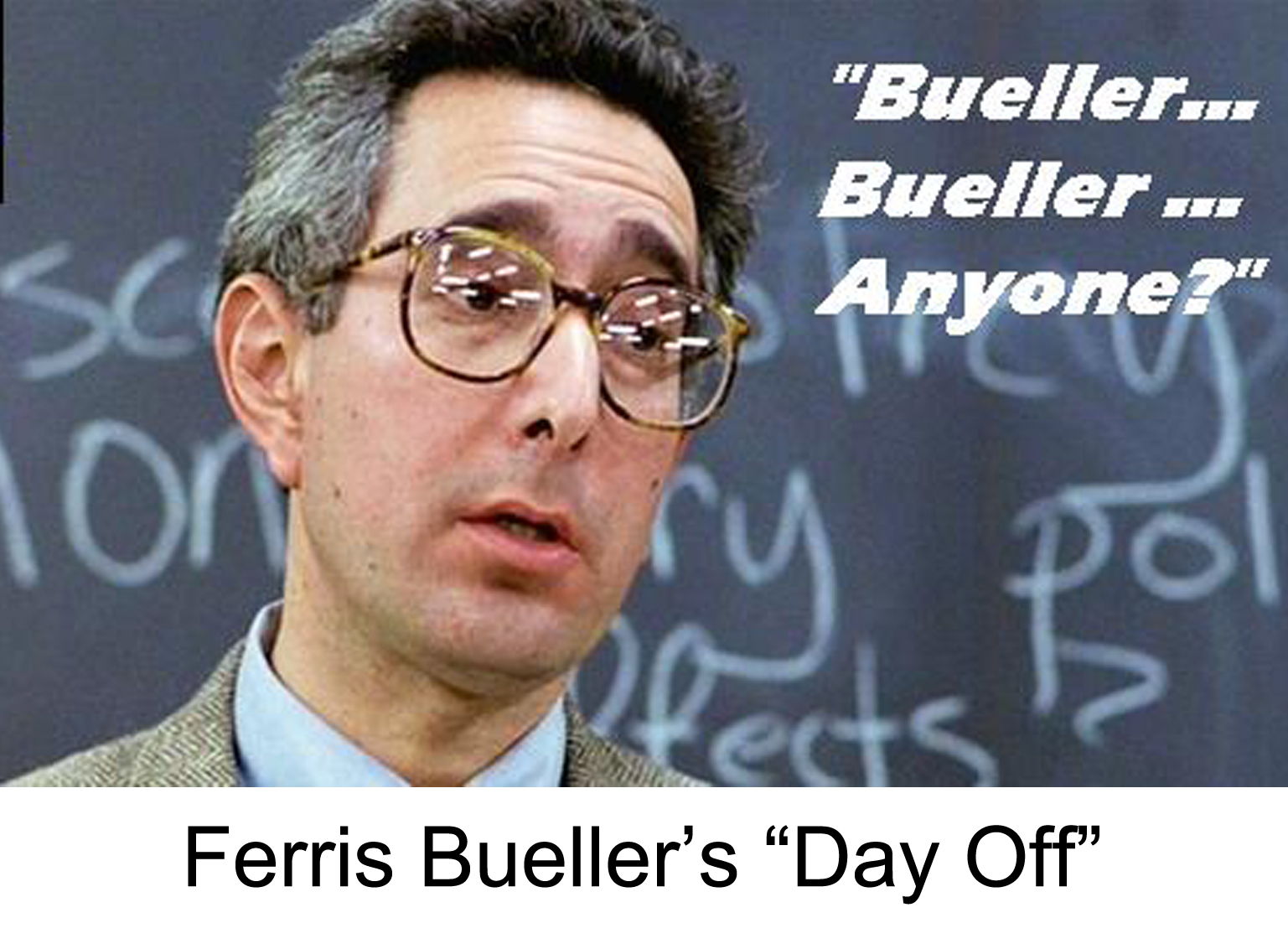
I’m very unsettled within myself.  Anyone else get that feeling like you are on the outs with the world and you are going to make a muck of someone’s day just because you are in it?  No?  Just me?  (Bueller?…)

It is true that my laptop has decided to stop connecting to icloud, and there has been no fix that will make it do so, which means everything I’ve stored in the cloud is only accessible on my phone.  Which is basically everything that was supposed to be on the hard drive.  This has been disconcerting in the extreme as all my writing and school-related documents and many other things I rely on every day are difficult to access.  I can’t even sign out to try to sign back in. (And before you send me tips, I’ve tried a lot: I’ve been on with three different Apple support people who were fairly useless.  I’ve rebuilt the iOS, tried making a new admin profile, even though all the profiles are already admin, tried having my account ‘forget’ my laptop, all to no effect.  I tried to get the icloud stuff off my phone onto an external hard drive but the phone wouldn’t connect to the drive so I couldn’t transfer the files.  I can’t even access icloud on any of the browsers on my laptop, and I’ve tried all four).  It is true that my laptop is very elderly in tech terms, but it still works for almost everything, so I’m disinclined to replace it.  

On the plus side, I’ve made some new progress on the novel, am reading lots of great stuff, have gotten some paid sewing alterations, and my neck and shoulder are still doing ok after the sturm und drang of the late summer.  Even after the car accident.  There is much to be grateful for.

We were at the monastery over Thanksgiving weekend, and I mentioned to one of the monks the situation with our car (we had rented a proper minivan for the long drive with the kids) and he just twinkled at me and said “The fast is full of temptations!”  It was a reminder to say the Jesus prayer when I feel like this and bring it all before God with trust and hope.  

Trust is a tricky thing, though.  If I think that trust means everything works as it should and life is smooth sailing, then when a tempest takes your ship, as it always does, it can feel like that trust is betrayed.  You end up shaking your fist at the sky and howling into the wind, when what you should be doing is lashing yourself to the wheel and giving over to the storm until it passes.  (Can you tell that Black Sails is still alive and well in my head?)  Rather, I should remember that trust means knowing that God works all things together for good.  And good is not necessarily what I think is good.

4) 1066 and all that

I’ve been reading a lot, as I said.  I discovered the Ruth Galloway series by Elly Griffiths.  A substacker I read recommended Griffiths’ latest book, The Frozen People, the first in a new detective series.  I enjoyed it enough that I decided to look into her first long-running series featuring an archeologist seconded to the Norfolk Police department.  I’m maybe five books into the twenty and enjoying them very much.  Consider it a kind of a middle-aged British Bones set in the fens.  

Starz’ Outlander prequel Blood of my Blood was an absolute treat from start to finish.  It was everything I hoped that Outlander could have stayed, and everything I loved about the first two seasons before they started messing with stuff for no good reason at all.  The disappointments of the later seasons of the show have even delayed my reading of Go Tell the Bees that I am Gone, the latest in the novels.  

I should state for the record that I still LOVE the books, as is well-documented here.  And I can hold the books separate from the show in my mind, but basically since season 4, I’ve been almost hate-watching it?  That’s not exactly right.  I do get sucked into the story, and I still think the show is well-written, high production value, great acting/casting, etc.  It’s more that because I know what happens in the books is not how it is playing out on screen makes for a kind of cognitive dissonance.  I know once I pick up the book I’ll be completely sucked in, though.

In any case, there are some great Easter eggs in Blood of my Blood, and, because I mostly didn’t know the story, I had no expectations about the show.  The casting is spectacular.  I’m eager for season 2.

I read a number of forgettable Cold War spy novels, plus a few non-fiction books about Cold War era espionage and am considering a novel on the topic.  (The Ipcress File is a fun watch).  I also read Harald Jahner’s excellent pair of books about Weimar Germany and the twenty or so years after WW2 ended, Vertigo and Aftermath, respectively.  I would call them paradigm shifting.  His writing style is novelistic and accessible, which my fuzzy perimenopausal brain appreciates.  Jahner’s books helped me understand a lot about European politics in the 20th century and also went a long way to fitting the pieces of the longer history puzzle together in my mind.

My other obsession remains England from 500 AD - 1066 AD.  After watching The Winter King, which is a King Arthur retelling in the time period in which the real Arthur is thought to have lived, I watched King and Conqueror, which is set in the first 10 months of 1066, ending with Hastings.  The latter show has some issues, namely messing with timelines, events, and some basic character mistakes; the actual events and personages are soap-opera worthy, so I’m unsure why they messed with it?  I did enjoy it, but I sort of had to turn off the historian part of my brain and let the show be the show and not actually what happened.  I am planning to read Ed West’s book on 1066 soon.


Anyway, the two shows formed bookends to the books and series I’ve read and watched in past years about the period: Vikings (through season three; it went off the rails by four), The Last Kingdom, which picks up roughly where Vikings leaves off, and Vikings: Valhalla, which takes place about 40 years after The Last Kingdom.  (Season one of Valhalla is just ok; I gave up one episode into season 2.  Michael Hirst’s touch was sorely missing).  The new Robin Hood on MGM+ picks up about 100 years after Hastings; it depicts it as a clash of Saxon vs. Norman invaders, which is interesting and timely after King and Conqueror.  There are some things I don’t love about the show, but I’ll stick with it for now.  (As an aside, I have the old BBC Robin Hood on while I’m sewing and it is a delightfully campy romp.  The costuming is hilariously bad, and the characters broadly drawn, but it is so light and enjoyable to rewatch.  Plus: Richard Armitage).  

I’m sorry The Winter King was canceled after one season; they were really hitting their stride and I was curious to see where it would go.  There were some issues with the storytellings, obviously, but it had high production value and the character development was great. (Fair warning, the bad guys are REALLY bad).  I’m planning to read Bernard Cornwell’s Warlord triology on which The Winter King is based.  And I want to revisit The Mists of Avalon, which I read many years ago and loved.  I’m still plugging away at the Corwell’s Saxon Chronicles, on which The Last Kingdom is based.  I think what I liked best about almost all the shows mentioned is that they take the religion of the characters seriously, and also deal with the conflicts between Christianity and paganism in the time fairly.  

5) Mythology

I also highly recommend The Return, which is the story of Odysseus’ return to Ithaca at the end of his journeys.  Ralph Fiennes and Juliette Binoche knock it out of the park, and Binoche especially is magnificent.  The last ten minutes of the film are Oscar-worthy and took my breath away.  Binoche says very little, but her face conveys everything.

Speaking of The Odyssey, one of the annual assessment prompts in 7th grade Humane Letters is: “The Odyssey is the only true story.”  (Humane Letters in Upper School is no joke, ya'll).  I have this poster that one of the Humane Letters teachers designed that says: “The hero must go down into Hades in order to get home.” Which I think covers it all.  

6) Fairy Tales

On my driving to and from school for various kid activities and pick ups, I’ve been catching up on Storytime For Grownups’ Summer Session.  This past summer she delved into fairy tales, and I’m completely captivated.  There is an interview early on in the summer with Boze Herringdon and he said something to the effect that fairy tales undergird all our stories to some degree, and, since they go back thousands of years in one form or another, without those tales, we cannot know who we are as a culture.  He noted that a lot of writing and screen-based storytelling in the past 10 years has gotten away from that and it is almost uniformly rubbish as a result.  It’s like trying to build a house over a canyon.  You cannot do it.  We’ve collectively forgotten our stories.  It has given me a lot to think about as I edit my manuscript and continue to shape the story.  I’m still trying to decide what “type” the story is: Cinderella, Beauty and the Beast, or a Bluebeard story.  Or something else all together.  There’s a symbolic underlayer there that is important, even if it isn’t visible.

7) Friends in Singapore?

I’ve noticed a large uptick in my stats the past few months, mostly from Singapore.  While I would be delighted to welcome new readers, I strongly suspect a data firm is training an AI on Google’s blogger content.  Several other bloggers have noted similar statistical findings, so I think I can be safe in saying that.  In which case: boo, go away! Please…?


Wednesday, September 16, 2020

All Souls Enchantment


I think I've only mentioned my love of A Discovery of Witches in passing here, but it bears repeating.  I love this series!  The television drama series is a great adaptation of the book (I'm very eager for series 2 in January).  Like all great adaptations, the book and the visual drama inform one another, talk to each other.  

Sometimes a movie or tv series convinces me to read the book; in the glut of unedited novels currently in the universe, it is often hard to spot the gold from pyrite.  (I say that as a writer who is increasingly despairing of modern publishing).  The English Patient was one such, and I remain convinced that book and movie are complementary to one another, and that full understanding of the beauty of each is best had in the presence of the other. The movie is a visual feast and visceral truth, and the book is a poetic rendering of the human condition. I love them both equally.

Pavillion of Women was another one that I liked the movie (not outstanding, but interesting) and read the book. The book blew me away, it was so fabulous. Very occasionally I like a movie better than the book, but usually the book is more fleshed out.

Re-watching A Discovery of Witches rather reminds me of the joy of seasons 1 & 2 of Outlander, which were excellent adaptations that spoke to the text and informed it, rather than the grudging viewing I've done since early in season 3, when the writers went off the rails with the story line.  I don't know why I can't quite quit the drama series; I'm so annoyed with all the things the writers have changed from the books for no good reason, and then have to catch up in ways that don't make sense.  On the other hand, when they nail it, they really nail it, so I guess the system of periodic rewards keeps me coming back?  I dunno.

I read the whole All Souls triology this spring, and then Time's Convert, an add-on novel that explains the backstory of some of the supporting characters.  It is a world I enjoy escaping to, and I found myself coming back to the series this month.  Matthew B. Crawford's book was great, and while I'm only about 100 pages from the end of Yuri Slezkine's doorstop of a book, I am a bit stalled on it mentally.  

So I restarted the first book, A Discovery of Witches, and watched series 1 again.  After reading the book, the adaptation is even more brilliant, as I could fill in details from the book in my mind.  It made for a very rich and satisfying viewing experience.  There have been few enough of those in the past six months, and I'm grateful this one seems evergreen.

Outlander writers: take note.

Wednesday, April 1, 2020

Yarn Along: Knit! All! The! Things!

 Greetings from Isolation Land!  How is everybody holding up?  We are midway through week three of house-bound homeschooling, and I'm not going to lie, it has been hard.  The school has been fantastic with lesson plans and teacher support, but it isn't the same as being in school, with the loving and patient work of the teachers and staff.

The walls close in on me a couple times per day, and I just want things to go back to "normal," whatever that is.  But I know that is impossible now, and am trying to get used to the new normal.  I remind myself of the hardships others have endured in the past, of the history of disease (something that is of particular research interest to me), as well as what this sacrifice is for: the people on the front lines of this war who take care of the sick and provide food for the hungry.

~knitting~

All the things, obviously.  I'm supervising my kids' homeschooling, and there is really nothing else I can do during that time except knit a bit here and there and try to keep up with housework.  By the time evening comes, I'm too done in for anything else.  


Knitting seems to be the only thing I really want to do right now anyway.  So I finished Ponchik's sweater in short order earlier this week, and immediately made a little version for her doll "Baby." 


Birdie immediately asked me to make one for her stuffed elephant, so I spent today working on that for her.  It is the reverse of Ponchik's because I'm running low on the orange yarn and have more of the blue.  Plus they will be easier to identify. 


I should finish it tonight or tomorrow and get it blocked.


I worked a few more rows on my languishing Sorbet Doocot, and am nearly to putting the sleeves on holders, by which point the body should fly along nicely.  I did drop the front neckline an inch or so, and I'm hoping my maths work out on it.  I'm still wearing my blue Doocot all the time, so I'm excited to have another one.  


I got this self-striping sock yarn for Christmas, not because I have any intention of making socks, but because I loved the colors and wanted to figure out some kind of shawl or scarf using the self-stripe pattern.  Anyone have a good one that actually utilizes the self-striping?  Most of the patterns I have found that use self-striping yarn aren't really utilizing the stripes as such.

~watching~

Not much, to be honest.  I have been watching season five of Outlander with some grudge, but I think episode seven might just have redeemed the season for me, which has been extremely uneven, and I feel has strayed too far from the book.  Actually, the problems really started in season three when the writers went off-book, and seasons four and five have been uneven where they've tried to course- correct the story line to make it work and bring it back to center.

Where the show hews closely to the book, it works spectacularly, and the performances by the actors are wonderful and nuanced.  Episode three was particularly good, but then, that episode was a direct lift from the book, dialogue and all.  But when the show strays too far from the book, it really goes off the rails for me.  I think there have to be a portion of the writers have not read far enough ahead in the series to know that if you change x or y you affect a major storyline in book five or six, and that all the roads leading to that storyline are going to be detoured as a result.  *cough* Murtagh* cough*

That said, episode seven was extremely well done, and the performance by Sam Heughan was wonderfully truthful and emotionally deep.  I know what is coming in episode eight, having read the books many times, and I'm now curious to see how the show will play it out.

I tried watching a alt-history drama called SS-GB in which the Battle of Britain is lost in 1941 and Britain is occupied by the Nazis, and Scotland Yard is called to investigate a murder.  On the surface, it was intriguing, but I had a hard time sticking with the storyline, even though I liked watching the actors and the production value was high.  Ditto for Babylon Berlin, which barely held my interest through the pilot.  Probably it is the stress of the situation and being so sick, but nothing holds my attention for long on a screen.

~reading~


I have been reading quite a bit though.  Nothing taxing, just a fantasy series by Sarah J. Maas, but I have gulped down the first three books in short order, and am now working on the fourth.  I still have to finish the All Souls Triology (I confess to watching A Discovery of Witches for a 3rd time...) but am kind of saving it for when I finish this Maas series.

~sewing~


Also not much.  I did get some mending and darning done, and got around to taking the front waistband of my green linen skirt apart so I can change the center box pleat into two side pleats, but haven't sewn it back together again.  I also need to cinch the elastic on my marigold linen skirt a bit since it has grown slightly too big.  I bought some rosy-ochre colored linen and some dark teal linen for summer skirts, but I need more time, energy, and mental space to make those up.  I was ready to take my blue and rust corduroy skirts totally apart to take them in properly but ended up wearing both this week instead, and while the fit is still not great, they are both wearable, so I'm inclined to leave them for now.  

~misc~

I started following a couple of excellent Instagram accounts in March, and would be remiss if I didn't share them!  

The first two are accounts that started during the pandemic by artists who have been recreating classic works of art with found materials.  They are: @covidclassics and @tussenkunstenquarantine
You won't regret it!  


 The other accounts are not recent, but are rather curated by medieval scholars, and I just discovered them.  The pictures are amazing, and the captions hilarious.


I mean, come on.  That's funny.  @medievalmarginalia, @middle_ages_history, @medievalbestiary, @_medievalart, @damien_kempf are all brilliant accounts.

And finally, if you aren't watching Sir Patrick Stewart's #ASonnetADay
readings, you are really missing out on a lovely treat.  #shakespearemakesitallbetter 


 Linking with Ginny for Yarn Along.

Monday, November 12, 2018

Watching: Outlaw King


Over the weekend, I watched Outlaw King with Chris Pine, and I have Thoughts.  I've been waiting for this film since August, after reading a preview article in a magazine.  Braveheart was a huge movie for me (I went through a brief phase in high school where I wore warbraids in my hair as an homage), and sparked a love for Scotland that only intensified once I discovered the Outlander series sometime in 1998.  I wrote a Rather Long Paper on Robert the Bruce in college, so I've got a stake in the field, so to speak.

I did like Outlaw King--rather a lot.  Chris Pine's performance is wonderful and understated, and his Scottish accent is quite good.  Florence Pugh as his wife was an interesting choice, and I enjoyed her performance as well.  The chemistry between the two of them was fun to watch.

The film picks up approximately where Braveheart leaves off, but I would have appreciated a better line of succession between the two films, given how closely they are related.  One cannot possibly make a film about Robert the Bruce that picks up the story in 1304 without at least a nod to Braveheart.  I did read that there was more of the history in the original version of the film that showed at the Toronto Film Festival, but that director David MacKenzie trimmed about 20 minutes from the beginning to streamline the story, so perhaps there was more of a connection in the original film than what I saw on Netflix.  There is a bit about William Wallace in the text at the beginning of the film (all the text on screen was incredibly tiny and not on screen for very long--I'm not sure what the post-production people were thinking) and there is a plot point at the beginning that revolves around Wallace's execution, but I would have liked a better through-line.

My main complaint about the film is Billy Howle's slightly unhinged depiction of Edward II, as well as the choice to cast Stephen Dillane, who was almost unrecognizable as Edward I.  Edward I, known as the Hammer of the Scots, was a big man by the standards of the time and quite forceful; his other nickname was Longshanks.  Dillane is not a particularly imposing figure nor is he a scenery-chewing actor.  Truth be told, I think both men were miscast for these roles.  I love Stephen Dillane, so it pains me to say this.  Patrick McGoohan was so brilliant as Edward I in Braveheart, I confess, Dillane just didn't live up to McGoohan's portrayal.  Edward I of history is a ruthless, ambitious king, a man who brutally subdued both Scotland and Wales, instituted law and order rule, and had a fierce enough temper that a man once died of fright in his presence.  I saw none of that in Dillane's performance.  The script sidesteps Edward II's well-documented weakness, and his general unsuitability as king, choosing to portray him as an immature hothead, rather than the weakling later killed by his own nobles in a particularly gruesome way.  My research suggested that the Braveheart portrayal is closer to the real man, as Edward II was obsessed with frivolous things and focused heavily on his relationship with Piers Gaveston, caring little for war.  There is also little evidence that he and Bruce were childhood friends, as Outlaw King wants to suggest.

I did wish the film had a grander sweep, and that the stakes were a bit higher or better articulated.  Perhaps I am too well-acquainted with the story, but I was not surprised by what happened to Bruce's wife or the fate of Red Comyn (indeed, I was waiting for both events to occur).

What the film does well is to show the Bruce as a man determined retake Scotland from the English, and to demonstrate his brilliance as a tactician.  One of the points in my Rather Long Paper was that Bruce was extremely adept at taking current military strategy and adapting it in new ways.  He took the schiltron, or rows of wooden spikes, used to great effect under Wallace's campaign, and made them into rectangular mobile units, which was truly devastating to the mounted English.  I also posited that one of Bruce's strengths was in choosing battlefield sites that best suited the legendary Highland charge, rather than allowing the English to mow them down on flat solid ground.   In the Outlaw King, the pivotal battle scene is the battle of Loudoun Hill, and the geography and stationary schiltron are both used to great effect to beat back the English.  It must be said, the battle scenes in the film are very bloody.  I had to avert my eyes.  They are on par with Braveheart's battle scenes, and there are still parts of Braveheart that I can't watch.

Bannockburn was the final battle for Scotland's independence in the 14th century--Bruce chose the high ground and the Scots were able to come screaming from on high to terrify and defeat the British camped in the valley below.  I was able to visit the field of Bannockburn in 2005, and was gratified to see my theory held, based on the geography of the place and what we know about the troop movements in the battle, which was the final confrontation between the British and Scots before the Declaration of Abroath, which effectively declared Scotland's independence.

The film makes some interesting cultural choices that I appreciated, showing people singing songs together while working or marching or in domestic scenes, and the chanting in the churches is of the period and not simple Gregorian.  It all brought to mind the wool waulking songs on season one of Outlander.  Speaking of Outlander, Duncan Lacroix (Murtagh) has a small part in this film, as does Stephen Cree (the elder Ian Murray).  To which I say: Wherever you go, always take a Murgtagh with you.  I also liked the synchronicity of James Cosmo, who played Hamish's father in Braveheart, and also played Bruce's father in Outlaw King.  (I did play a little game of "Find the Scottish Actors from Braveheart" in this film; there were a few, I think).

In the end, I think it is a film worth watching, and an interesting take on Robert the Bruce.  I'll be curious to see how Angus MacFayden's Braveheart sequel compares.

Tuesday, July 19, 2016

Talking Tuesday: History and Memory

A bit late today, but I wanted to share a great article about history and memory by Jonathan Sacks.  I think it works well with what I'm working on for the piece about Matthew B. Crawford's excellent book, The World Beyond Your Head.  In it, Crawford argues that from the so-called Enlightenment onward, we in the West moved from a pre-modern mindset that seeks objective truth outside oneself, in the world and beyond it, to find one's place in the larger history of the world and to submit one's will to the wisdom of those who've gone before, to a post-modern mindset that seeks nothing beyond the subjective reality of one's own mind and views any incursion of the outside world as a threat to one's self.  The self reduced to the sum total of its desires: the Platonic consumer.

I think this relates to Sacks' article because he argues first that we Westerners have been far to quick to discard our history and our memories, and that the distinction is important, as is the virtue that arises from knowing both.

In Standpoint, Sacks writes:

“I want tonight to look at one phenomenon that has shaped the West, leading it at first to greatness, but now to crisis. It can be summed up in one word: outsourcing. On the face of it, nothing could be more innocent or productive. It’s the basis of the modern economy. It’s Adam Smith’s division of labour and David Ricardo’s theory of comparative advantage that says, even if you are better than me at everything, still we both gain if you do what you’re best at and I do what I’m best at and we trade. The question is: are there limits? Are there things we can’t or shouldn’t outsource?

“The issue has arisen because of the new technologies and instantaneous global communication. So instead of outsourcing within an economy, we do it between economies. We’ve seen the outsourcing of production to low-wage countries. We’ve seen the outsourcing of services, so that you can be in one town in America, booking a hotel in another, unaware that your call is being taken in India. This seemed like a good idea at the time, as if the West was saying to the world: you do the producing and we’ll do the consuming. But is that sustainable in the long run?

“Then banks began to outsource risk, lending far beyond their capacities in the belief that either property prices would go on rising forever, or more significantly, if they crashed, it would be someone else’s problem, not mine.

“There is, though, one form of outsourcing that tends to be little noticed: the outsourcing of memory. Our computers and smartphones have developed larger and larger memories, from kilobytes to megabytes to gigabytes, while our memories, and those of our children have got smaller and smaller. In fact, why bother to remember anything these days if you can look it up in a microsecond on Google or Wikipedia?

“But here, I think, we made a mistake. We confused history and memory, which are not the same thing at all. History is an answer to the question, ‘What happened?’ Memory is an answer to the question, ‘Who am I?’ History is about facts, memory is about identity. History is his-story. It happened to someone else, not me. Memory is my story, the past that made me who I am, of whose legacy I am the guardian for the sake of generations yet to come. Without memory, there is no identity. And without identity, we are mere dust on the surface of infinity."

~Jonathan Sacks, "Rediscovering Our Moral Purpose", Standpoint Magazine online, July/August 2016 issue.

I read an excerpt of different article from Standpoint from the same issue that noted that our Western heritage is in danger of being forgotten as we engage in collective amnesia.  I think author Daniel Johnson overstates his case a tad, but he notes that 

"The diagnosis, surprisingly, is more complex than the cure. There are numerous viruses attacking the Western body politic, but only one medicine. To face the future unflinchingly, we must return to the past: listen to the patriarchs and prophets, the ancestral voices of our literature, break open the arsenal of our intellectual history, and mobilise the resources of righteous indignation against the dominions, principalities and powers of darkness that threaten to overwhelm us. The great books, from Homer to Shakespeare, from Plato to Pascal, from Dante to Bellow, must once again not only be assigned to every student, but learned where possible by heart. The music of the masters, from Gregorian chant to George Gershwin, from Sebastian Bach to James MacMillan, from Palestrina to Arvo Pärt, must not only float across the courts and quads of our colleges, but fill our airwaves and headsets."

~Daniel Johnson, "What Made the West Great Is What Will Save Us", Standpoint Magazine online, July/August 2016 issue.

I've noticed that the more I think about our post modern world, and how to reclaim a pre-modern mindset, particularly in trying to disengage the notion of myself as primarily a consumer, rather than a child of God, the less time I have for popular culture, particularly music.  I occasionally enjoy a tune or two, but I don't want it to be to the mainstay of my aural diet.  It feels like the aural equivalent of living on gummy bears.  I find myself craving substance in the music I listen to, and am drawn to the storytelling style of folk music, as it speaks of past events, of history and memory, bound up in melodies that stay with you, become part of you.  (There is also liturgical music, but I put that in a different category).  I also live with a lot more silence than I used to.  

I suppose having a sort of physical ascesis forced on me by circumstance has brought me to a place of somewhat more restraint in terms of what I want to live on in my soul.  I am drawn to books and programs and movies that explore the truth of the human condition out there, and particularly ones that acknowledge the extra dimensionality of the spiritual.  I know I keep banging on about episode seven of the BBC's War and Peace, but it really blew me away.  The book also has several other scenes of immense truth and spiritual beauty that I keep returning to in my mind.  In season two of Outlander, episode seven (what is it about seven??) was breathtakingly, heartbreakingly beautiful and spoke so much truth to me about loss in motherhood, about the challenges that face a marriage in the face of that loss, and what comes next.  The book is even more intensely beautiful.  

I continue to work through my thoughts on Crawford.  I wrote several more pages last week, and have a rough first draft, but after several days' thinking, it feels like a rubbish first draft, so I may scrap it and start again.  I can't really decide how to tackle what I want to say; I'll get there eventually.  I keep telling myself to be patient, let it marinate.  I keep talking with different friends about various aspects of the book and related reading I've been doing, and that helps me to refine my thoughts as well.

Tuesday, June 2, 2015

Talking Tuesday: The Fiery Cross: Risk and Promise

I am deeply interested in art that speaks to the reality of the human condition.  I am drawn to movies and television shows that explore this as an underlying theme, and the books and musical albums that resonate most strongly with me are studies in humanity--the dark places we all inhabit at times, as well as the sunny places of light and goodness that can shine through terrible circumstances.

I am interested in actors who take on these sorts of projects and really dive deep into that exploration. I am fascinated just watching them unfold a character, a slow layer at a time.  (Richard Armitage, Michael Fassbender, Tobias Menzies, Sam Heughan, Ralph Fiennes, Cillian Murphy, Ioan Gruffud,  Rooney Mara, Nicole Kidman, Ewan McGregor, Tilda Swinton, Henry Cavill, Damian Lewis, Claire Danes, Eddie Redmayne, Idris Elba, Dominic Cooper, Romola Garai, Daniel Day-Lewis, Sarah Smart, Andrea Riseborough, James Spader, and Kenneth Branagh spring immediately to mind)

It is why I like Steve McQueen's movies (no, not that McQueen), even though they are hard to watch at times.  It was what I liked about the early seasons of Grey's Anatomy (before it went off the rails somewhere around season six)  I remember reading an interview with Michael Fassbender a few years ago, and he said that one of the things he liked about working with McQueen was his ability to ask, through a movie, "What are we doing here? Where are we going as people?  What are we doing to one another to get there?"  Ron Moore asks similar questions in the Starz production of Outlander.  So does The Americans. These are deeply fascinating questions to me.   My favorite musicians tend to explore these things through their songwriting.  Sting's latest album, The Last Ship, is a deep row through the waters of his childhood; in it, he discusses the loss of the ship building business in the north of England and what that did to the social fabric of life where he grew up.  It is an album that leaves one with much to ponder.

I hesitated a long time over posting today's selection because I try to avoid posting about certain topics, and yet, they are part of the experience of being human, and of human relationships--most particularly of a marriage relationship. So I'm going to take a deep breath and hit publish. *ducks and hides*

There is so much in Diana Gabaldon's books that illustrates the truth in the human condition.  I think it is why I come back to them year after year, and always find something new that speaks to me.  I'm re-reading the series again, and am up to The Fiery Cross (Book Five).  I post the following without commentary or context.  I edited the passage slightly.

   "Ye didna bring any with you," he said.  "When ye came back." 

[ . . . ]
   
   "No, " I said, a little faintly.

He paused a moment [. . .]

   "Why not?" he asked quietly.

   "I...well, I...I actually--I thought--you have to keep taking them.  I couldn't have brought enough. There's a permanent way, a small operation. It's fairly simple, and it makes one permanently...barren."  I swallowed.  Viewing the prospect of coming back to the past, I had in fact thought seriously about the possibilities of pregnancy--and the risks.  I thought the possibility very low indeed, given both my age and previous history, but the risk...

   Jamie stood stock-still, looking down.

   "For God's sake, Claire," he said at last, low-voiced. "Tell me ye did it." 

I took a deep breath, and squeezed his hand, my fingers slipping a little.

   "Jamie," I said softly, "if I'd done it, I would have told you."  I swallowed again.  "You...would have wanted me to?"  He was still holding my hand. [. . .] His skin was warm on mine.  We stood close together [. . .] for several minutes.  He sighed then, chest rising under my ear.
   
   "I've bairns enough," he said quietly.  "I've only the one life--and that's you, mo chridhe." I reached up and touched his face.  It was furrowed with tiredness, rough with whiskers; he hadn't shaved in days. 

   I had thought about it.  And had come very close indeed to asking a surgeon friend to perform the sterilization for me.  Cold blood and clear head had argued for it; no sense in taking chances.  And yet...there was no guarantee that I would survive the journey, would reach the right time or place, would find him again.  Still less, a chance that I might conceive again at my age.

  And yet, gone from him so long, not knowing if I might find him--I could not bring myself to destroy any possibility between us.  I did not want another child.  But if I found him, and he should want it...then I would risk it for him.

   [. . .] Our lovemaking was always risk and promise--for if he held my life in his hands when he lay with me, I held his soul and knew it.

~Diana Gabaldon, The Fiery Cross, New York: Delacorte Press, 2001, pp 183-184.

Wednesday, March 11, 2015

Yarn Along: Neckwear

I finished two neckwear pieces last week during the big ice/snow storms and even had a chance to wear both before the big thaw over the weekend.


The snow fall meant a lot of heavy shoveling (the snow was very wet and we got about 7" in 12 hours time), but it was so pretty the next morning.


Unfortunately, the hard freeze meant that both of our cars were stuck in the ice from Wednesday morning to Sunday evening.  We finally chiseled out enough ice to get free for school drop off on Monday morning, thank God!  We are blessed to be able to get the kids to and from school on the bus, but it is a royal pain to do so.


Anyway.  My knitwear!  I made another Claire Capelet, this time in wool.  I really love my cotton one, and wear it a lot, but I wanted a warmer one with a slightly longer collar.  I used some Ella Rae superwash bulky yarn that was the perfect color and knitted it up one afternoon.


I also did a double crochet tie, which I like the look of much better than my original version.


This one is slightly more pink than the cotton one, but it is very warm!


I also finished the remake of the Soft Shoulder Cowl that I made last fall and frogged after discovering several mistakes and fit issues.  I corrected the fit with some notes from another raveler who'd made the shoulders wider and made sure to count my stitches carefully and place stitch markers appropriately.


Steam blocking the edge helped it lay flat (although the front does want to flip up a bit) and making the neck 5" long instead of 9" looks much better and less bulky.  I'm pretty pleased with it.  It looks odd when not on, but quite nice as an accessory.


I find that scarves that loop around the neck a bunch of times tend to overwhelm my upper body, as my neck and torso are quite short, and these sorts of neck warmers are just right.


The purple is very pretty--a deep reddish purple.  I used a twisted rib stitch on the outer edge instead of the stitch called for, as it was easier and produced nearly the same result.

In reading, I'm making progress with Gold Rush by Charlotte Gray and enjoying it very much--her narrative style is very engaging.  There are quite a few differences from the Klondike mini-series, but I'm okay with it.


I've also gotten a bit more into The Making of Home by Judith Flanders and I'm just fascinated.  She discusses the differences in the development of the family structure between what she calls "house" countries and "home" countries--that is, countries that linguistically differentiate between house and home.  Southern Catholic Europe, for the most part, are "house" countries, and northern Protestant Europe are mostly "home" countries.  In home countries, a late marriage model was norm, as was the setting up of nuclear family households, with the wife being a major economic contributor to the household and family after marriage.  Home country families also tended to have fewer children by virtue of marrying later.  House countries tended to have high rates of illegitmacy (although Flanders admits that she doesn't fully understand the reasons for this; she just notes the statistics), a rather extreme gender imbalance (boys far outnumber girls)  


She also spends an early chapter discussing domestic life in Renaissance art and notes that like our modern era, there is much that is "invisible" in paintings but, according to household inventories, were definitely common parts of a home.  She cites the spittoon as an example not only of a household item that is frequently omitted from domestic paintings, but also as an example of human behavior at the time.  She notes that our modern photographic spreads of even "ordinary" households omit things like toothbrushes and dishrags, but are clearly present and used.


I think what I find helpful about that part of the discussion is to realize that images have always been manipulated to present an idealized view of the home, and, in order to maintain some equilibrium about the disconnect between idealized imagery and reality, I need to be more choosey about the imagery I consume.

I'm very curious to see what else she has to say about it all.  

Linking with Ginny for Yarn Along.

Monday, March 9, 2015

Outlander and the Human Condition

In light of everything that has happened, it seems more than a little superficial to return to the regularly scheduled light program of mundane domestic life and sewing and knitting related posts with the odd deep thought here and there.  I do know from experience, however, that we cannot hold tightly to our first grief forever, and that a new normal does eventually reassert itself.  Grief always marks a person, and loss stays with you.  I suppose some of the pain of being human is that of loss.


Interestingly enough, I do think this is one of the larger themes of the Outlander book series--that of loss, of grief, of the slow process of putting one's life back together after irreparable change and trauma.  The traumas and losses experienced by the characters stay with them, become a part of who they are, influence the choices they make and the responses they have.  I think it is also one of the reason why the books resonate with so many readers--the themes are part of the universal human experience, and there is something there that anyone can relate to.  Outlander has given language to much of my own grief about Philip's death over the years; for that alone, I'm profoundly grateful to the series.  


So far, the Starz series has proven a good, if not entirely faithful adaptation.  There are some things that simply don't translate well to the screen, and some minor changes were made for story arc or thematic reasons, but for the most part, the episodes and experiences of the books are all there, played out on the screen.  We see Claire's frantic attempts to get back to the stones, and to Frank; we see her grief at the possibility that he is lost forever; we identify with Frank's despair and anger at Claire's perceived abandonment.  We feel Claire's increasing attachment to Jamie, her accommodation to living in the past, while at the same time trying desperately to hang on to her 20th century self.  


But enough about that.   I have a sewing post that I'll put up as soon as I can get photos taken, as it was another Historical Sew Monthly Stashbusting Challenge, and I plan to participate in Spring for Cotton, so I'm sure there will be some sewing-related posts for that as well.  I've gotten some knitting done lately as well, so I have a Yarn Along post ready for Wednesday.  In short, trying to find the new normal, which will include a lot of the old normal.  


Outfit details:
18th century petticoat skirt: me-made
Ralph Lauren sweater: via ThredUp
JCrew teal blue t-shirt: via ThredUp
Capelet: knitted by me
belt: etsy

Wednesday, December 17, 2014

Oscillate: Yarn Along

Working on an Amy Herzog sweater pattern this last little while.  I changed the cable pattern to a straight 6 stitch cable, two back and one front cable, as it was easier to remember the stitch pattern with all the increases and decreases for the waist that way.  (I also didn't care for the look of the original cable pattern)  I've had to frog bits of it back here and there, and my knitting at the frogged lines is a little uneven, but I'm hoping that will fix itself with some careful blocking.  I'm also confused as to why the increases/decreases happen at either side of the cable panel; it makes them much more obvious, and I think it would work better at the edges, but I'm not quite confident enough in my knitting pattern hacking skills to just change the instructions as I go.


The color is a really deep mallard blue, and I'm happy with it.  It is Patons DK Superwash, but it doesn't feel like any other superwash wool I've worked with before.  Feels more like straight up wool as the yarn isn't particularly soft. I do have another cardigan that is similar in feel and I can wear it without itching to death, so I think it will be okay with something under it.


I also finished this little capelet a few weeks ago and I really love it.  It's the first thing I've made for myself that I really love and wear (well, except those gauntlets from earlier in the fall--I've worn those a ton too)  I used KnitPicks Billow yarn in Comfrey, and size 11 needles, and the texture is so interesting.  It is a useful garment and I've worn it quite a few times already.  I've got yarn to make a wool version as soon as I get a bit further on the Oscillate sweater.


The yarn is spun with differing thickness (fingering up to super bulky) so that produced a nice textured piece.  I do think I'll make the ties a bit shorter on the next one and the collar a bit wider as this one the collar wants to flip up some.  I'm curious to see how it comes out in wool as the cotton in this one makes it very floppy (which is fine).

Not reading anything worth writing about--just researching an essay on the history of tissue patterns and sizing guidelines and getting frustrated with the faulty logic of some writers in this area as well as the sketchy information available.

Linking with Ginny for Yarn Along!