Thursday, October 20, 2016

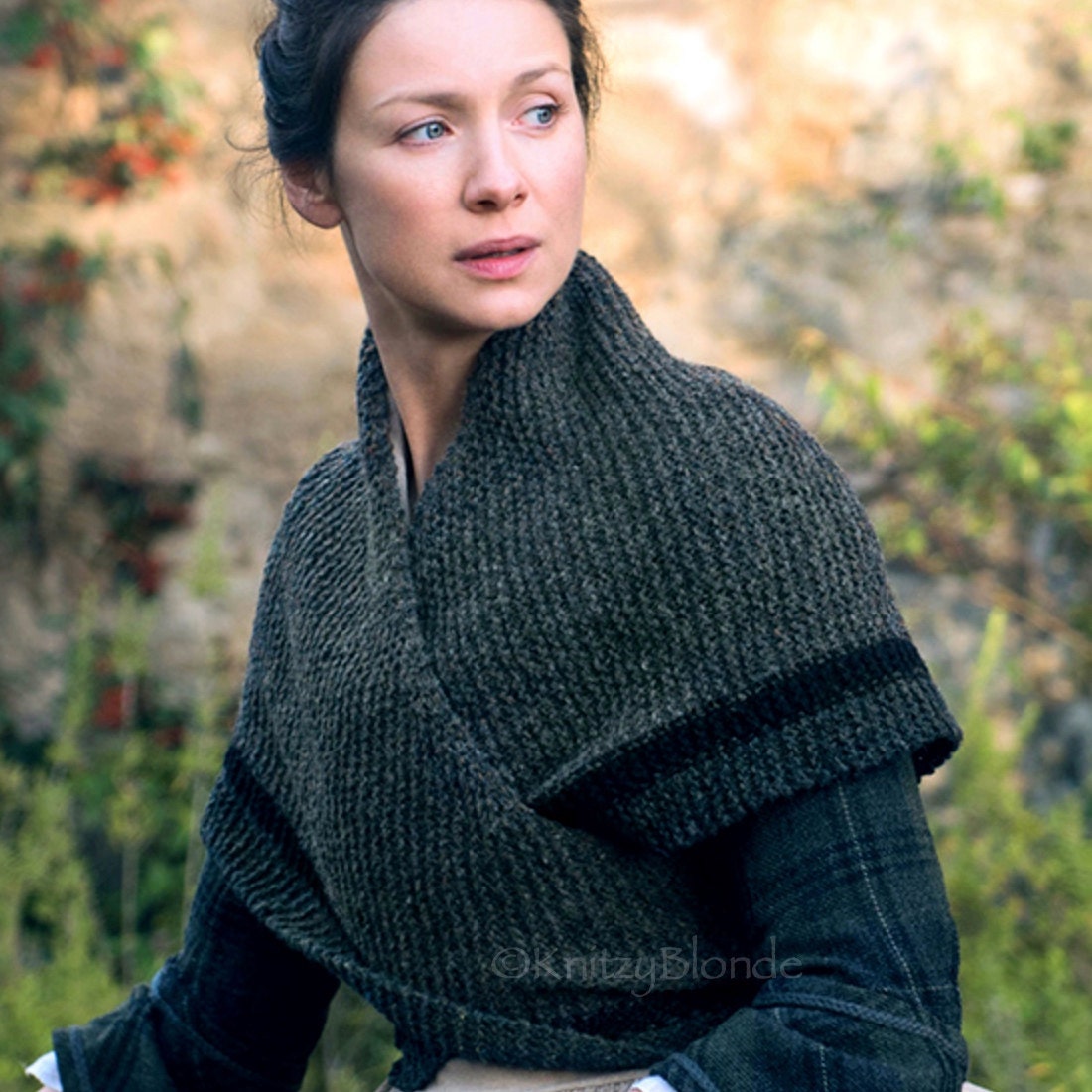
Charcoal Linen Frock of Goodness

I didn't really think my fall rotation would involve much fluidity.  I was pretty happy with where my rotation ended last fall, and the few pieces I had added seemed to be perfect additions to an already great rotation.  Then...I don't know.  I stopped wanting to wear prints, and just wanted to wear muted solids.  We had a week or so of quite chilly weather (yay!!) and I realized that my cold weather clothing is almost invariably solid.  The non-solid dresses are printed such that they function as a solid in my wardrobe.  My fall rotation was very heavy on the prints, and as the weather started to cool, I realized I was longing for my cold weather solids.  (Of course, now we've had a week of freakishly warm weather, and I'm happily back into my prints; go figure.  I guess that is why these transitional rotations need to include a bit of both).  I've done some swaps, thinned the ranks, and now I think I'm pretty happy with things.  I'll post a round up about the fall at the end of next month.


I've done a lot of making this fall.  I've been learning how to sew with knits (not a steep learning curve, but figuring out which sorts of knits I want to wear has been challenging after wearing woven garments almost exclusively for several years now).  I made a few wadders.  I fell in madly in love with linen, particularly a heavier weight that works well for cooler weather.  I rediscovered my love for historic costuming and have the opportunity to give a demonstration of 18th century working class clothing next month.  I want to learn how to weave.


That's all to the good, I think.  I realized that I really want to be doing some form of living history (if I could find a proper job doing it that works with my crazy schedule and life, that would be even better!)  It is something to pray about, to be sure.  I feel quite certain that these interests and abilities were given to me for a reason, and the fact that I've been studying history for so long speaks to a deep-seated desire for knowledge about the past.  I pray God will reveal His plan for these things in due time.


In the meantime, here is the last of the linen dresses for this rotation.  I have a good friend from church who is at a very similar stage of life to me and has a similarly busy academic husband; we've been talking a lot lately about life stuff, and she mentioned that her sartorial mood is all blacks and grays lately.  She sews a little, and had asked me to trace off my redrafted Simplicity 1080 for her at some point.  I decided it would be a fun thing to make her a frock too.  I bought some charcoal gray linen and in the meantime, made up the navy blue linen dress out of TWO YARDS.  I was frankly shocked that I squeaked it out!  I had to trim a little off the sweep of the bottom skirt portion to make the cutting layout work, but I think I actually like the trimmer silhouette, so I did that with the charcoal linen and was then able to cut two dresses out of the fabric I had bought for my friend!  So we each got a charcoal linen dress.  #winning.


I'm really into kangaroo pockets right now, and so I made both dresses with them.  They are so fast and easy to apply, and I really like them as a functional matter when wearing.  I'm also loving shawls this year--I'm so eager to finish my Rent/Tess shawl.  Of course, I cast on another sweater Monday evening, so I've slowed down on my progress, but I need several things on needles so I don't get bored.

Details:

Teal Coco underdress: Telio Organic Cotton (this brand is suddenly everywhere!), Coco pattern, length added.
Charcoal linen overdress: Nine Iron linen from fabrics-store.com in IL019 weight, vintage bias tape, Simplicity 1080 (redrafted)
Orenberg shawl: bought in Russia in 1998 from an old lady on the side of the road (no kidding!)
Shawl pin: Ginny Sheller's Small Things etsy store
Thistle necklace: etsy
Earrings: bought in Ireland in 2010
Boots: Macy's (last year)
Over the knee socks: O Socks from sockdreams.com

Wednesday, October 19, 2016

A Bit of a Blether

(I started writing this in June 2015; I do get to everything sooner or later.)

Two summers ago, People magazine released their 2015 Body Issue.  It was in the waiting area of at my physical therapist's office, and I picked it up and leafed through it, intrigued by the plus-size model on the cover.  I should have known better.  After a two page interview with the size 22 model, Tess Holliday, plus a two page photographic spread of 'real' people being fearless about their bodies (including a double amputee and a mom in a bikini with stretch marks), the following 15 or 20 pages was the same ol' same ol' of scantily clad celebrities with cartoonish Batman-style captions. Celebrities whose stock in trade is their body--a body that they can afford to work on like a full time job, with personal chefs, personal trainers, personal assistants, and, failing that, plastic surgeons.  It was objectification of the worst kind.  I closed the magazine after a few pages in disgust and sort of hated myself for even opening it in the first place.

I've been thinking a lot lately about cultural visual norms, and how that relates to body image.  From what I read and hear from other women, most of us have some issues with our bodies.  There is always something that doesn't quite measure up to the cultural standard that assaults us from every magazine cover, every U.S.-produced television show, every perfectly cultivated photograph on social media.  It is a visual onslaught.  The funny thing is that, going by averages, almost no woman fits this ideal.  Let's set aside for the moment whether the ideal is healthy, and whether the actual average woman is healthy.  I want to focus specifically on the visual norm that it creates, and the huge gap between it and reality.

I think we can all agree that most of us don't look like celebrities.  No one looks like Kate Middleton 10 hours after having a baby--heck, I don't even look that great when I'm all dressed up for a dinner party and haven't just given birth (I really think she did all new mothers everywhere a great disservice by showing up outside the hospital looking like a model so quickly after the birth of her daughter;  I'm intrigued by the notion being floated about that perhaps she actually gave birth a week earlier)  I find it very interesting and frustrating that so many clothing retailers offer garments for a lifestyle that many of us don't live on the daily.

I think it is one of the chief reasons why women struggle so much to find clothing that fits well, feels good, and suits their lifestyles.  (The proliferation of style blogs and the agonized comments sections bear this out)  I know it is something I struggle with.  There is a big disconnect between the cultural visual norm and where many of us actually live.  Which is, mostly in the car, at the school pick up and drop off, getting groceries, running errands, going to work, hanging out at home, etc.  Not jetting off to some island or fancy dinner party or partying on the red carpet.

I think our collective body image suffers as a result.  This is setting aside issues of health and other related things, and really thinking about visual norms, how we feel about ourselves, and how we view our bodies.  Personally, it is all too easy to look at my body in the mirror and see all the ways it falls short of the cultural ideal.  I have stretch marks, saggy skin, a baby belly that is never going away, flab, cellulite, skin spots, gray thinning hair, dry skin that splits and keratinizes, dark hair on my arms and legs.  And that is just the stuff that I theoretically have the ability to change.  I'm also proportioned oddly and quite muscular for a woman.  But I'm okay with all that, actually. Yes, I need to lose weight to be more healthy, yes, I should take better care of my body because it is the only one I get.  But I'm also realistic that I'm not going to look like a teenager forever, and my body bears the marks of where I've been, what I've done with my life, the children I've borne. Please note that I'm not suggesting that we celebrate obesity, or that there are not many many real health and societal costs to having more than 2/3 of the population overweight or obese.  I also think it is a real problem that a publication like People would choose to celebrate someone with an eating disorder (going by the information in the cover story interview).

That said, I would like to propose some ways to develop a positive body image.

1. Change your visual norm.  I've tried to stop buying/reading fashion magazines, because so much of the imagery is designed to make me feel bad about my body.   I've lately noticed the same phenomenon when I spend too much time looking at vintage patterns for style inspiration.  Instead, I'm trying to steer my research toward photographs of actual women, rather than line drawings of an ideal that many women didn't even attain at the beginning of the 20th century with serious foundation garments!  The gap between the ideal presented by a disinterested fashion industry and reality has always been there.

2.  Related: watch what you watch.   I admit to a serious weakness for British and Aussie television programming, in part because it is excellent and well-written, but also because the people look more normal.  Very often, the leads have lumps and bumps, imperfect faces and teeth, everyone comes in different shapes and sizes and ages, and the visual norm is closer to the diversity I see in my everyday life.  (I especially like the Miss Fisher Mysteries and Inspector Lewis for this reason--almost all the characters look like normal people to me)

3.  Measure yourself and write it down.  This may sound counter intuitive, as I think a lot of us can get hung up on the numbers on the tape or scale, but actually, I think knowing your measurements is empowering.  It is just a number, after all, not a judgement.  Don't compare numbers with other people, because the same measurements can look very different from person to person.  My measurements are very similar to another blogger I read (I'm not linking for obvious reasons), but my proportions are totally different, so she looks quite different from me in similar styles.  I could write a whole exposition on the size game played by the fashion industry, and what a total random crock it is, but suffice to say that size is just a number, like anything else.  It has no relation to reality, there is no industry standard, it is whatever the fashion people say it is, and how they make their slopers.  They might as well come up with sizes designated Frog or Fish for all the sense the sizing charts make.  Measurements are power--measurements will help determine if something will fit well, and if you sew like I do, help determine what size to cut out for best fit.  A body is a body, and a number is a number.  All bodies are good bodies. (Keep in mind that until the late Renaissance, the visual norm, and ideal beauty standard was one of a pregnant-looking woman.  Even into the Renaissance, with the standard changing to a more fitted torso and padded hips, skinny women were always trying to find ways to plump up their bodies to meet the ideal of the day.  It wasn't always about looking like skin and bones.  End rant).

4.  Try to understand your body's quirks and understand your body's limitations.  I'm never going to be tall and willowy, even if I lose 80 pounds.  I'm always going to be petite-proportioned, with stumpy lower arms and legs and a lot of muscle mass.  I'll always have more physically in common with a peasant woman than a ballet dancer.  I'm always going to have narrow shoulders and beefy upper arms--I know this because I was quite thin once.  My basic body proportions aren't really that different from when I was thin--just bigger.  I think understanding limitations can be quite freeing.  Do I wish I was thinner?  Of course.  I am working on it.  And I'm not saying that I don't wish sometimes to have long legs and lean muscle mass, but I've learned to appreciate what I do have.  My dad always says that our people were made for pushing threshers with our feet, and I'm often grateful for my (sometimes freakish) strength.  Graceful, I am not.  I'll never be a sprinter or even run very fast.  But I can lift a washing machine, take the pump apart, and put it all back together, so there's that.


That said, I still have lots of times where I just feel jumpy in my skin.  Like Picasso went and did a number on my face.  I think this feeling serves as a reminder to me to back away from the cultural norms--perhaps I've been spending a little too much time on Facebook (and my previously excellent ad blocker seems to have stopped working, so my Facebook experience is definitely visual ad-based these days).  I've maybe spent too much time scrolling Pinterest for ideas.  (To be fair, I find Pinterest an excellent research tool for historic clothing construction, but I'm as guilty as the next person of using it idly to look for sartorial inspiration)  

I wrote a little bit a while back about Anne Hollander's excellent book, Seeing Through Clothes. That book really turned a lot of my thinking on its ear, not just as a strict sartorial matter, but how imagery impacts and reinforces cultural norms, and how those visual norms change over time.  It also convinced me that what we wear matters, as it is the first thing the world sees.  Our clothing speaks for us, and can become a kind of short hand for who we are.

There aren't a lot of people around who dress like me, or personally find visually normative.  I've never minded being the odd man out, particularly with my clothing, and I don't strive to be one of the crowd, but it is hard to feel so at odds with what is in front of you all the time.  I'm trying to be more selective about the imagery that I allow into my head, particularly in the blogs that I read, and to set harder limits for myself with social media.  I think this can only help in the long run.  I long for a solid self.

I'm working on it.

Tuesday, October 18, 2016

Talking Tuesday: Green Living

image via google images
"If, over several centuries, you remove ordinary people from access to productive land; if you 
arrange agriculture to produce a small number of commodity crops for distant markets using exotic inputs rather than serving its locality; if you allow food prices and land prices to get so out of kilter that almost nobody can afford to farm, that only rich people can afford to live in the countryside, and that poor farmers globally need to search for paid work wherever the pull of the global economy takes them; and if you impose a car-based infrastructure on the countryside while systematically stripping it of services and public transport, then, yes, it’s probably fair to say that it’s greener to live in the city and that few want to be small-scale farmers. But there’s no reason to accept all that as given." 


Image via.
If you'd told me in my younger days that I would pine for country life in middle years, I'd probably have laughed at you.  I longed for the city, for urban existence, for the excitement of living amongst so many different kinds of people, for the access to many different kinds of experiences.  

Now, after many years of living a gritty urban existence, and raising children here, my perspective is a little different.  I don't think it is realistic for us to move to the country, given the demands of my husband's work schedule, and our rather intense need for emergency pediatric health care throughout the year, but I confess I do long for the open spaces, for room for my kids to run around without fear, for the ability to reclaim an older way of life.  The life we live now is fine, good even, but it isn't sustainable if something were to happen to the supply chain.  Having our water shut off regularly these last months during the water and sewer main replacement on our block, and dealing with food supply shortages this winter during the storm season made me realize that we are out on an island here; we have no access to fresh water should we need it, no ability to grow our own food, and almost no way to dispose of trash or human waste in a safe way if city services break down (as they frequently do).  It makes me anxious if I think about it for too long, so I try to dwell on the positives of living in the city.  God has us here for a reason, and we must rest content in that knowledge.

This weekend, for example, we had an impromptu block party when we temporarily closed our road with trash cans and a leftover traffic cone to allow our kids to bike in the street on a quiet Sunday afternoon.  Because our family was outside on the street, other families came out and pretty soon there was a whole mess of kids running around on bikes for a couple of hours, and the adults could chat and engage in fellowship, thus growing the social capital on the block.  

Our location is ideal for the life we currently live.  We live half a block from an Orthodox Church, which allows us to go to far more mid-week services than we would otherwise be able to, given everything.  We are five blocks from a large grocery store (and grocery stores are few and far between here, for some inexplicable reason).  We have easy access to grocery delivery services, and other delivery options.  We are an easy public bus ride to school.  Parking is a pain, but we have learned to navigate the murky waters of it and rely on cabs and Uber when it is impossible to move the car.  We live three blocks from our excellent pediatrician and the children's hospital is a short cab ride away.  We have a good group of friends, both for ourselves and our children.  My husband bike-commutes most of the year, and we are short train rides to New York and DC, both of which are needful for my husband's job.  

Image via
We are in a good place.  But sometimes, sometimes, I long for wide open spaces, with mountains at behind me and water before me.

Monday, October 17, 2016

Help a Friend in Need

I worked most of the morning on a pretty self-indulgent post.  It was navel-gazing in the extreme, and I felt weird about writing it in the first place, and was hesitant to post it.  I'm glad I left it in my drafts because when I went to read my feedly, I discovered that the lovely Jessica of Chronically Vintage has lost everything (and I mean EVERYTHING) in a tragic and senseless fire that consumed her home and everything in it.  She and her husband literally escaped with the clothes on their backs and are homeless and completely without property aside from their car.

She wrote about what happened today.  If you are so minded, please read, and consider giving to the funding account her friends and family have set up for her.  She is a lovely person who've I had the opportunity to get to know a little bit first through her blog, then through the combox here on my blog, and lately through private correspondence.  She is a sweet person with a big heart, and I really feel for her situation.  I can only imagine the devastation that she and her husband are feeling right now.

She and her husband both ran home-based businesses, and they lost everything related to their livelihoods in the fire as well.  They will need a big helping hand to put their lives back together.

Please consider giving.

Friday, October 14, 2016

Yarn Along: Making and Doing

This week (and school year, if I'm being honest) was just go-go-go all week long.  It felt like an All The Things week.  I did get a lot done, but didn't get much time to write about it, so this is going to be a bit of this and a bit of that.

~making~

After making three Coco knit dresses in a row, and then wearing them for a few days, I decided that I really don't like wearing that style of knit dress on its own.  The jersey I chose is a bit on the thin side, and I didn't like how I felt wearing them.  Like I forgot to get dressed or something.  I realized that I prefer woven clothing with some strategic knit layers.


I was ready to put them in my pajama pile (which does need some new blood), when it occurred to me that I could make a linen overdress and probably be happier with them.  I had some dark blue and  dark green linen that I had planned for frocks, so I went ahead and made them up this week.


I'm in love!  The whole thing works together, I think.  I really like the aesthetic of the linen, and the knit layer underneath is just right.  I still may repurpose the Cocos at some point (shorten the sleeves for a summer time pajama or something like that) but at least my effort (and expense) wasn't wasted.


(For the record, the layers under the dresses in these photos are just a ready-to-wear knit shirts.  Sometimes you need the extra layer on the bottom, sometimes, no).


These two linen dresses just feel like me.  Easy to wear, slightly rustic-looking, non-binding, unfussy, slightly muted, easy to layer up and accessorize.  I will write more about sartorial matters soon.


And I finished knitting something this week!  My L'Enveloppe!  I will write up my notes on ravelry, but mostly, it was an easy mindless knit.  The left sleeve is kind of evil at first (the instructions are a little bit unclear), but once I understood what I was supposed to do, it made sense and went quickly.  


I was a little uncertain about it as I was making it (whether I would like the finished product), but after blocking and wearing it this morning on a chilly school commute, I can safely say, I'm a fan.  I'd like to make another one in a lighter gauge.


This one is pretty bulky, but it is a nice neutral color and I think it will coordinate with a lot of things I have. (And you can see my Coco dress peeking out from the hem of the blue linen; I think the problem is that they don't actually fit me that well as a dress.  As a pajama or underdress, they are fine, but the sleeves are kind of loose, and the neckline is a bit strange on me)


I may add a few stitches to the collar side to snug it up a bit, as it wants to slide off on the right side, but otherwise, a satisfying project.


Getting L'Enveloppe off my needles meant I *finally* could cast on my Malabrigo Rios shawl.  I've been holding this yarn for almost a year, waiting for the right project, and I've decided I need a shawl that wraps around and buttons in the back.  I promised myself I wouldn't start a new project until something else came off the needles.  I'm using a version of the Rent Shawl, but my goal is to have it look like the Tess shawl in the end.  I like the instructions for the rent shawl better, and since they are both triangular shawls with basic garter stitch, I just need to make the wing span bigger to match the wrap of the Tess.


~reading~

I finished The Cottage Garden Diaries over the weekend and dove into Women's Work: The First 20,000 Years on Monday.  I'm fascinated.  I've decided that I need to read books that feed me on some level, and this book definitely fits the bill (The Cottage Garden Diaries also ticked the box).  Ms. Wayland Barber spends a lot of time trying to recreate how people made things long ago, for which only the archaeological record exists, rather than the usual written record.  She is an accomplished weaver and textile expert and her work and writing is amazing.


What I really love to do is living history, and to sort out how people lived and made in the past.  If I could find a job doing the sorts of things that Ms. Wayland Barber does for a living, I would be a happy camper. 

~domestic life~

In other news, our street is nearly finished (they are laying the asphalt today) and the sidewalks are paved again.  They laid the concrete road bed before the long Columbus Day weekend, so the kids could bike and play soccer in the street without fear this weekend.  

It was gorgeous weather, so it worked out well.  They were a bit disappointed when the asphalt guys showed up on Monday to start work.  I am ready to get street parking back!!


Nice new concrete sidewalks!  I strongly admonished the kids not to walk in it while it was still soft, as it is likely these will have last 15-20 years or more.


Piglet celebrated his namesday on Tuesday, and Boo is fighting an ear infection.  He had a fever for two days and had to stay home from school on Tuesday as well.  

Boo says he still can't hear well out of his left ear, and I think he is also fighting a sinus infection, but he has definitely perked up with some antibiotics and the fever breaking.  He's been back at school since Wednesday.

Whew!  I think that's all I got!  

Linking with Ginny for Yarn Along.


Friday, October 7, 2016

Yarn Along: Hitchhiking with Toast

I finished a bunch of stuff in the last little while here, and thought I'd share.

~making~

First up is Boo's vest.  I had intended to make it later in the season, so he could wear it as a Christmas vest (ours is January 7, so I thought I had a lot of time to spare) but he kept asking me and asking me when it was going to be done, so I figured, might as well get cracking.  It was a surprisingly fast make; I finished it in about a week.


He is super happy with it, and already wore it to church on Sunday (with a red t-shirt underneath, naturally)
 

I also finished my husband's wool kombu.  He somehow managed to lose his other one in the late spring, so I knew that was going to have to go on my sewing list for the fall (he says it fell off his bike, which begs the question why it was not securely stowed in his saddle bags, but whatever.  To say I was annoyed about this would be an understatement).  


I decided to use wool melton with a china silk lining to give it some extra heft and warmth, as he complains of cold a lot in the winter.  The combination was kind of a beast to work with.  The melton was great--it needed steam to press, but the stitches really sank into the fabric nicely.  The silk, however, wowza.  That was hard to handle.  It slipped all over the place, didn't want to stay on grain, was difficult to line up with the melton on the seams and so forth.  I was seriously doubting my sanity by the end of this project.  


But it turned out well in the end.  I hand worked the button holes, as usual, and used some buttons I bought this summer for the purpose.  My husband is a happy camper, I think!


It looks a little too wide in the shoulders on the photos, but I think it doesn't really look that way in real life.  I used the same pattern as for his first wool kombu, as well as the linen one I made him last summer for warm weather.  (It is a doctor's coat pattern without the sleeves or collar and shortened quite a bit--it works great for a kombu!  I got that tip from Fr. Andrew Damick when we were in seminary and lived next door to them)


And lastly, a Coco dress!  I admit, this is probably not the most flattering thing I've made or own, but lately I find myself in a different frame of mind, sartorially speaking, and this simple style of dress in a muted tone is really my jam right now.  I've worn this dress a ton since making it, and have made several more in shades of blue.


I lengthened the pattern by 8" (I split the difference between the two lengthen lines) and used the 3/4" sleeve.  I graded the top from a 5 to an 8 at the hips, which was a pretty large grade, but the sizing worked out.  Oh the joys of being a pear-shape.  I've gained a couple of pounds this fall, and it is all in my backside. 

I ordered a linen Japanese-style apron that I plan to wear over it.  Because apparently my current sartorial mood reads: Vikings.  (I just started watching that series--I'm a little late to the party, but it is a good one!  I tried it a few years ago and couldn't get into it, but I'm kind of hooked now)

And  yes, I know those kind of aprons are really easy to make yourself, but I'm just kind of out of steam for certain kinds of projects right now.


I also finished my Hitchhiker scarf!  It only took me a year.  To be fair, I only worked on it here and there, and used it as my traveling project because it was small and mindless.  I intend to give it as a gift to a friend.


It turned out rather well, I think.


The colors of the scarf don't really suit me, but I think they will look great on my friend, who has beautiful silver hair and a slightly different skin tone from me.


It does coordinate nicely with the dress, though!


I should probably say that my first attempt at this dress was a pajama that I've been wearing every night (it is short sleeved and knee length).  I used a Riley Blake print for it that rolled a bit on the edges, but oh man, this jersey was a rolling monster.  I tried pockets for this iteration, which were totally frustrating to install, and I ended up taking one of them off because it looked so bad.  I kind of like the asymmetry.  They are almost totally non-functional, however, because the jersey is so light-weight, so I left them off the blue versions.


I have gotten a lot of compliments on this dress when I've worn it, so I think it looks better in person than in the photos.


~reading~

I'm reading The Garden Cottage Diaries: My Year in the Eighteenth Century and it is totally fascinating.  


I have a couple of quibbles with some of her historical anachronisms (there are bound to be some in an experiment like hers, and she acknowledges most of them, but there were one or two that I just said, um, no.) 

The most glaring is her breezy statement that a woman of her standing (she bases her lifestyle on a low middle-class ancestor of hers) wouldn't have worn stays, as they would have been too expensive.  That is like saying a modern woman wouldn't wear a bra, because she couldn't afford it.  There are specific examples of garments like unboned jumps that were worn at home in place of stays some times, but mostly, women wore stays.

That said, I really love the book, I've learned a lot, and am eager to try my hand at bannocks!

I'm also more than 80% of the way through War and Peace!  I finally passed the part I've been anticipating, and it was good, but not quite as beautiful or lyrical as I expecting.  The movie version did a better job of translating those scenes.  That said, the book has some really wonderful parts that didn't make the movie, so I'm glad I read it.  My goal is to finish it before the Nativity fast.

~watching~

I had to give up the two shows I started on abc.com because they would only let me watch the first episodes for free.  Not cool, abc, not cool.  We don't have a television, so I can't sign in with a provider, and I don't want to pay $2.99 an episode on amazon when it will probably go to netflix in the summer.  Although I did get my husband into Designated Survivor, so we might pay for that one.

So I'm just watching Blindspot (and it is so good!) and catching up on Vikings.  I had another endoscopy this week, so I watched some old CSI: NY episodes while I was waiting for my brain to come back from anesthesia hiatus, and have enjoyed revisiting that show again.  

Linking with Ginny for Yarn Along!


Tuesday, October 4, 2016

Talking Tuesday: The World Beyond Your Head

At last we come to a discussion of Matthew B. Crawford's excellent book, The World Beyond Your Head.  I've talked previously about the broad strokes of the book, so I'll just dive into the nitty gritty and hope for the best.  I keep poking away at this, and I think I just need to post it and move on--I'm reading so much these days that dovetails with Crawford, that I'm never going to be able to incorporate it all.

Let us begin then, with the shape of things.  The premodern Western world thought about time and space as intertwined three-dimensional space.  I wrote my master's thesis on these ideas, and you can find an abstract of them here.  Basically, the idea is that all time is contained within a sphere, and everything that was, that is, or that will be is contained within that sphere.  We do experience time in a more or less linear (but not progressive) fashion, with one event following another, from birth to death, but the linear experience is still encapsulated in the larger sphere.  God exists outside that sphere in what best be termed the Eternal NOW.  For God, all time is happening all at once.  He is Eternally Present for all of humanity's existence.

If we start from this premise, and proceed to the idea that man's chief end is to glorify God and enjoy Him forever whilst pursuing theosis (or complete communion with God by purifying oneself of passions and coming back to a Christ-like mindset and habitation), then the world is an objective, knowable truth.  It is something to be discovered outside one's self, as part of the salvation journey.  In the premodern world, everyone was a pilgrim on a journey to a concrete destination.  We learn from those who walked the Way before us, gain solace from their struggles, joy in their triumphs as we work through our own within the larger community.

In the premodern mind, the world is corporeal; Christ was resurrected bodily, not just in spirit.  The Resurrection is an historical event, anchored in a particular place in time, but is also continuing its work in the world, as part of the Eternal NOW.  The worship of the premodern Church was physical, involving prostrations, crossing oneself, smelling the incense, seeing the icons (and in the westernmost part of Europe, the statuary), all while dealing with the weaknesses and passions of the physical body.  There was a whole-hearted belief in the spiritual dimension--in the world we cannot necessarily see with our eyes or feel with our senses, but inhabits our world, and has a direct effect on it.  God made the world and everything in it, and remains actively at work in His ongoing Creation.

(If this sounds a lot like Orthodox Christianity, it is!  The Orthodox Church was largely unaffected by Enlightenment thought).

The ideal of the premodern world is sanctity through intimate knowledge of God, obtained through fasting, prayer, and the sacraments of the Church.  Sanctity is something to actively pursue because heaven and hell are real places, and one's place in the afterlife is of utmost importance.  This life is built on the foundation of centuries of lived experience, custom, and corporate wisdom (what some call Tradition)

The art of the premodern world invites one in, to discover the truth of what is out there; it is what Charles Taylor calls "memesis" (A Secular Age).  Icons in particular are called windows to the soul, as they depict reality beyond themselves, and invite the worshipper to enter into them.

Writes Crawford: "We live in a world that has already been named by our predecessors, and was saturated with meaning before we arrived.  We find ourselves "thrown" into this world midstream, and for the most part take over from others the meanings that things already have." (The World Beyond Your Head [hereafter referred to as WBYH], pg 145)

The premodern world, with its objective truth, layered reality, involved Creator, and rich historical foundation, produced robust people who created some of the most stunning architecture, discovered and developed new technology (cf. Cathedral, Forge and Waterwheel, by Joseph and Frances Gies) and created art that remains unsurpassed.  Status derived from acquiring the skills and knowledge of the elders instead of from one's own "gumptions and mental capabilities" (WBYH, 162). They were able to attend to the world around them with sensitivity and purpose that was unhampered "by radical personal responsibility and instead rested secure in a knowledge and trust in the processes/wisdom that had come before.  There was no need for perform for the world" (WBYH, 162).  They were untroubled by questions of individual sovereignty or existential crisis.  Meaning and truth were all around them, waiting to be discovered.

We can now contrast the pre-modern world with the modern world--shaped by the so-called "Enlightenment."  I would rather call it The Great Flattening.  The round, multi-layered cosmos inhabited by premodern man has been made flat and one-dimensional in our modern age.

Let us move on to Decartes.  "Decartes began his inquiries by putting aside all supposed knowledge received from "example or custom" in order to "reform my own thoughts and to build upon a foundation which is completely my own." (WBYH, 130).  Basically, this is the sort of tabula rasa mentality that is so pervasive in education and modern culture today.  Rather than discovering the cosmos outside oneself, and to find the objective truth of God working in Creation, we moderns think of ourselves as existing in the vacuum of our minds, born blank and pure, with no connection to what has gone before or will come after, no sense of the fallen condition of mankind.  The ideal then becomes the proverbial brain in a jar.  As such, the modern self has no interest in learning about or from the outside world.  Indeed, the outside world becomes a threat to one's own autonomy.  We've become obsessed with "authenticity" as Charles Taylor notes in A Secular Age.  "To live authentically, Norman Mailer would write a century later, one has to divorce oneself from society, to exist without roots, to set out on that uncharted journey into the rebellious imperatives of the self" (WBYH, 130).

The ideal life that is presented to us by a pre-packaged medium is the solitary person, standing on a vista somewhere, existing without ties or bonds to keep him in place.  Any threat against individual autonomy ("identity" would perhaps be an appropriate stand-in for autonomy) must be rooted out and destroyed.  Anything that takes our attention outside ourselves and joins it to the physical world must be regarded with suspicion (WBYH, 131).

In short, the thinkers of the Great Flattening have given us our intellectual inheritance and cultural mandate:

  • "We are enjoined to be free from authority--both the kind that is nakedly coercive and the kind that operates through claims of knowledge.  If we are to get free of the latter, we cannot rely on the testimony of others.
  • The positive idea that emerges, by subtraction, is that freedom amounts to radical self-responsibility.  This is both a political principle and an epistemic one.  
  • We achieve this, ultimately by relocating the standards for truth from outside to inside ourselves.  Reality is no self-revealing; we can know it only by constructing representations of it.
  • Attention is thus demoted.  Attention is the faculty through which we encounter the world directly.  If such an encounter isn't possible, then attention has no role to play." (WBYH, 116)
Consider how these principles inform our sense of things: man's chief end is no longer to glorify God and to pursue theosis, which is something that naturally must occur in the embodied world, that is, in God's creation.  Man's chief end in modern terms is to glorify himself and seek knowledge and understanding only within himself, a disembodied being, apart from the corporeal world.  Worship becomes less corporeal and more of a spectator event, "mediated by representations" (WBYH, 170)

Crawford gives a  number of examples of how our attention and ability to attend to things in the embodied world has fractured and been given over to abstractions.  Modern cars are built to be incomprehensible to all but a computer expert; machines provide manufactured experiences, somethings to the point that we perceive them as "better" than the real thing.  (Taking a photograph of a magnificent sunrise, and adding a filter to "enhance" the image is a good example of this).  Images themselves become a kind of mediated reality--we're all quite familiar with the phenomenon of the social media constructed self.  (The recent Pokemon GO mania is another good example of mediated or constructed reality).  Crawford points out that we've ceded a lot of power and agency to the corporations who manufacture these experiences for us, and that the subsequent feelings of alienation and loneliness that are the hallmarks of our modern age are natural results of this loss of agency.  "For such a self-choosing from a menu of options replaces the kind of adult agency that grapples with things in an unfiltered way" (WBYH, 117).  

The irony of all this radical atomization and mediated reality is that individuality is actually in decline.  We are unable to attend to things that are less engaging than the menu of options presented to us, and "[w]hen we inhabit a highly engineered environment, the natural world begins to seem bland and tasteless,  like broccoli compared to Cheetos.  Stimulation begets a need for more stimulation; without it, one feels antsy, unsettled, hungry almost" (WBYH, 17).

Crawford notes that it takes Herculean effort to resist the cultural pressure to conform, to become the late modern consumer self, presented through layers of filters, abstract from the real world.  Who wants to eat broccoli when piles of cake are sitting there, calling your name?  "What sort of outlier would you have to be, what sort of freak of self-control, to resist those well-engineered cultural marshmallows?" (WBYH, 17)

So where does that leave us?  We can't very well shove Pandora back into her box and return to a premodern world.  Our world is thoroughly disenchanted, as Jamie K. Smith notes in How (Not) to be Secular.  In order to reclaim our attention and agency, Crawford suggests submission to authority, two words that seem antithetical to the whole Western ideal of the fully autonomous individual (WBYH, 24).  If, in our modern Western mindset, autonomy (self-rule) is good, and heteronomy (rule outside the self) is bad, because is threatens the autonomous self (WBYH, 24), then we have to consider that autonomy might be antithetical to true human flourishing.  "To emphasize this (heteronomy) is to put oneself at odds with some pervasive cultural reflexes.  Any quick perusal of this self-help section of a bookstore teaches that the central character in our contemporary drama is a being who must choose what he is to be, and bring about his transformation through an effort of will.  It is a heroic project of open-ended, ultimately groundless self-making.  If the attentive self is in a relation of fit to a world it has apprehended, the autonomous self is in a relation of a creative mastery to a world it has projected" (WBYH).  This is very much in keeping with the idea of liquid modernity.  We are no longer pilgrims on The Way, but rather tourists, flitting about from one place to another, no particular destination in mind.

How do we reclaim our ability to attend to the embodied world, to submit to authority outside ourselves, to seek God in Creation as the chief end of our lives, and seek heaven as the destination of our embodied souls?

We must first resist the temptation to mechanize human behavior--to understand people in purely mechanical or technological terms.  Humans are not machines.  People are often unpredictable and react in ways that can't be reduced to an algorithm or steam engine metaphor.  The ways we talks about ourselves and our minds must be informed by this fact.  We need to stop deferring to machines and bowing down to the anonymous masters who made them.  Yes, machines make our lives easier and more convenient in many ways, but once a machine starts constructing reality for large numbers of people, it is a problem.

Let us train our minds to attend.  This means reading real books, putting aside screens for a specific period of time--the mind will resist such mental exercise, but it is ultimately good to retrain the mind to attend to longer-form reading and to be able to ruminate on it in a quiet environment.  We will need to prepare for discomfort during this process, as we retrain ourselves away from constant stimulation and entertainment toward quiet contemplation in order to attend to the state of our souls and our journey of theosis.  This will be hard, as we live in a highly processed post modern environment that goes to great lengths to prevent silence and stillness without mediated reality.

Let us celebrate art that explores the object truth in reality--art that looks to reveal that which might not be obvious by inviting the viewer in.  Let us gravitate toward art as memesis--what Taylor describes as reflecting what is already out there rather than fetishizing art as creation: originality with whatever subjective connection the mind projects.  

Let us inhabit our bodies, with their frailties and strengths, in order to learn to tame the passions of body and mind.  Let us not be disgusted by the work of the Creator in making us, and instead embrace physical reality, from birth to death.  It will be messy, unsanitary, and real.  Let us be present at the deathbed, and relearn the ways of preparing the body for death.  Let us stop running from and fearing death.

Let us leave our atomized selves behind and become familiar with our history, the physical landscape, and our place in it.  Let us work with our hands, learning within a longer tradition of making.  Let us be humble and acknowledge the wisdom of our elders.  Let us be prepared for the general messiness of real human interaction, and be willing to walk with people through trials and triumphs, despite whatever personal discomfort or inconvenience that may bring.  

While we may not inhabit an enchanted world, we can work to re-enchant ourselves, our communities by acknowledging the ongoing work of the Creator in the world, of training the spiritual eye of our hearts to see what the eye does not see, to be sensitive to the spiritual dimension.  

Let us journey on as pilgrims, together.

References:

Juliana Bibas, "The Orthodox Clock and the Map of the World." Road to Emmaus Journal, Vol XII, No. 1 (#44).

Matthew B. Crawford, The World Beyond Your Head: On Becoming an Individual in an Age of Distraction. New York: Farrar, Strauss, and Giroux, 2015.


Jamie K. Smith, How (Not) to be Secular: Reading Charles Taylor.  Michigan: Eerdmans, 2014.

Charles Taylor, A Secular Age. Cambridge, MA: The Belknap Press of Harvard University Press, 2007.