Showing posts with label reading. Show all posts

Wednesday, December 10, 2025

Ease, or in which I confess the strange state of my head

Consider this a throwback to 7 Quick Takes.  But first a bonus take: I directed my first Slavonic liturgy for the feast this past Thursday.  Whew!  It was an out of the frying pan into the fire sort of situation and I had zero time to prepare (which meant I had to pitch everything by ear), but also didn’t have time to psych myself out.  It went…ok.  I think.  It is hard to direct, do festal liturgics in your head, and read music/think in a different language.

1) Ease in clothing

As the seasons change, I usually evaluate my clothing bins as I’m switching things over.  Given the rather wide range of temps we have here, I end up having sort of micro-seasonal wardrobes.  There’s the false fall wardrobe that is useful from September to October, the not-quite-full winter wardrobe of November and December, and then the full thing by January.  I should just have it all out all season, but I really don’t have enough room.  I have one full size drawer for tops and pants, and one tiny closet that can hold a max of 14 hangers with a tiny shelf for sweaters and pajamas.  Plus a tiny 14 hanger closet on the landing that I share with Boo.  It holds stuff that is hard to store in vacuum bags or pieces that I wear very occasionally but like to have easily accessible, like my two blazers or black funeral dresses and long black monastery skirts.  I get about 7 hangers in that one.  There isn’t much room to switch only twice a year.  And there’s the thing that a overly full closet stresses me out.

Anyway.  I’ve been thinking a lot about what I’m wearing right now, what I reach for on repeat, and the word I keep coming back to is: Ease.  I’m never uncomfortable in my clothes, but there are some styles that are easier than others.  While I love the style of my wool pencil skirts, and how sharp they look, they are fairly useless for real winter weather because I get so cold inside the house.  I’m already wearing one or two wool base layers and wool socks, and occasionally put wool tights over that whole mess.  I end up feeling like the Michelin man by the time I’ve got myself tolerably warm top to bottom, so I’m mostly wearing a couple wool maxi skirts in rotation or occasional cords.  It looks fine, but I dunno.  I was totally feeling the clothes-to-wear-while-living-in-a-Central-Asian-yurt vibe of last month, but somehow it feels tired now.  But maybe that is just the fast talking (see #3).

I think I’ve just got to admit defeat and say that the pencil skirts are really only useful for those micro seasons on either side of winter.  Or occasions when I need to look very put together, which, frankly, at this stage of life, isn’t often.  

2) Keeping vs. throwing

My first instinct is to get rid of the pencil skirts, even though I especially love the yellow one and a black wool pencil skirt is almost always a good idea to have in your wardrobe.  The mauve one fits really well and is one of those strange neutrals, so I’m reluctant to consign it.  I don’t like to store stuff I’m not wearing, and my mother will be the first to tell you that I’m a thrower, not a keeper.  I’d like to think I’m a thoughtful thrower, not a chaotic one, but still, she’s not wrong.  

I even wonder why I feel such a strong moral judgement within myself about buying things.  We live well within our means, give a lot of it away, buy a lot second-hand, but on some level, I think that any purchasing is avarice?  It’s completely irrational and ridiculous, I know.  Comes from the unfortunate association with being overweight most of my life.  I always feel like I take up too much space and want to apologize for existing.  My head is a weird snarly place.  

At the same time, I think there is value in being surrounded by books and things that are grounding to a space.  I tend to like cosy instead of utilitarian spaces, much as I like the unclutteredness of them.  Bauhaus has very clean lines and open spaces, but I wouldn’t want to live in it.  Utilitarian can feel soulless and dead.  Can I live here, please?  (There was some famous writer who thousands of books in his personal library, taking up every horizontal space and stacked several deep. I would live there).

I keep having an argument with myself about my throwing tendencies.  On the one hand, our family of six lives in approximately 1600 square feet (literal cheek by jowl with our urban neighbors), and much of it vertical space, with no garage and a 400 square foot unfinished basement with low ceilings.  There are a total of four closets in the house, the two tiny ones I mentioned before, and 2 other regular size ones, but one is in a room that isn’t big enough to be a bedroom.  So almost everything is stored in drawers, under beds, in bins, etc and I utilize the vertical space as much as possible.  I like to think I’m pretty efficient with our space, all things considered.  

We are also in a strange transition with our kids, where they are kind of outgrowing their toys, but aren’t quite ready to part with them.  (I’m also mindful that grandchildren are not very far off, relatively speaking).  I rarely force the issue unless we are really squeezed, but half of one full-size closet is given over to toy and lego storage.  Some of the things I store are sentimental for me.  I have my mom’s Barbie doll from 1960, including the case and all the clothing.  My sisters and I played with that Barbie as much as ours and I’m attached to having it.  Ditto a few baby clothes from the kids and a single preemie diaper from Ponchik. I have things from my beloved late grandmother that I love to use and see in my house, like her spoon collection, or many hand-crocheted or knitted doilies. These things make up the stories of our lives.  

Does it really matter if our closets and drawers are full (but not bursting) and we use or enjoy almost everything in our house at one point or another?  I think no.  It is okay to take up space in the world.  To leave something of yourself behind for others to use and enjoy.  The material aspects of our being bind us to the past and future and yet ground us in the present.  This has been a new space in my head: to hold the idea that keeping is a positive good and not a cluttering mess to be managed.  

3) Nativity Fast

Which brings me to the Nativity Fast.  I was in a car accident the Friday before Thanksgiving and totaled the car.  It was a fairly minor fender bender at low speed in stop and go traffic, and totally my fault, but Mazda 5 vs. Nissan Armada means the Mazda 5 loses every time.  The whole front end of our car just buckled whereas the Armada has only a fist-size dent in the bumper.  Thankfully no one was hurt and we’ve been able to replace the car with another Mazda 5 of the same vintage with lower mileage, but there’s the licensing and inspection and parking permits, and all that jazz to do now.  (The real insult to injury: we had the old car inspected the day before the accident).  

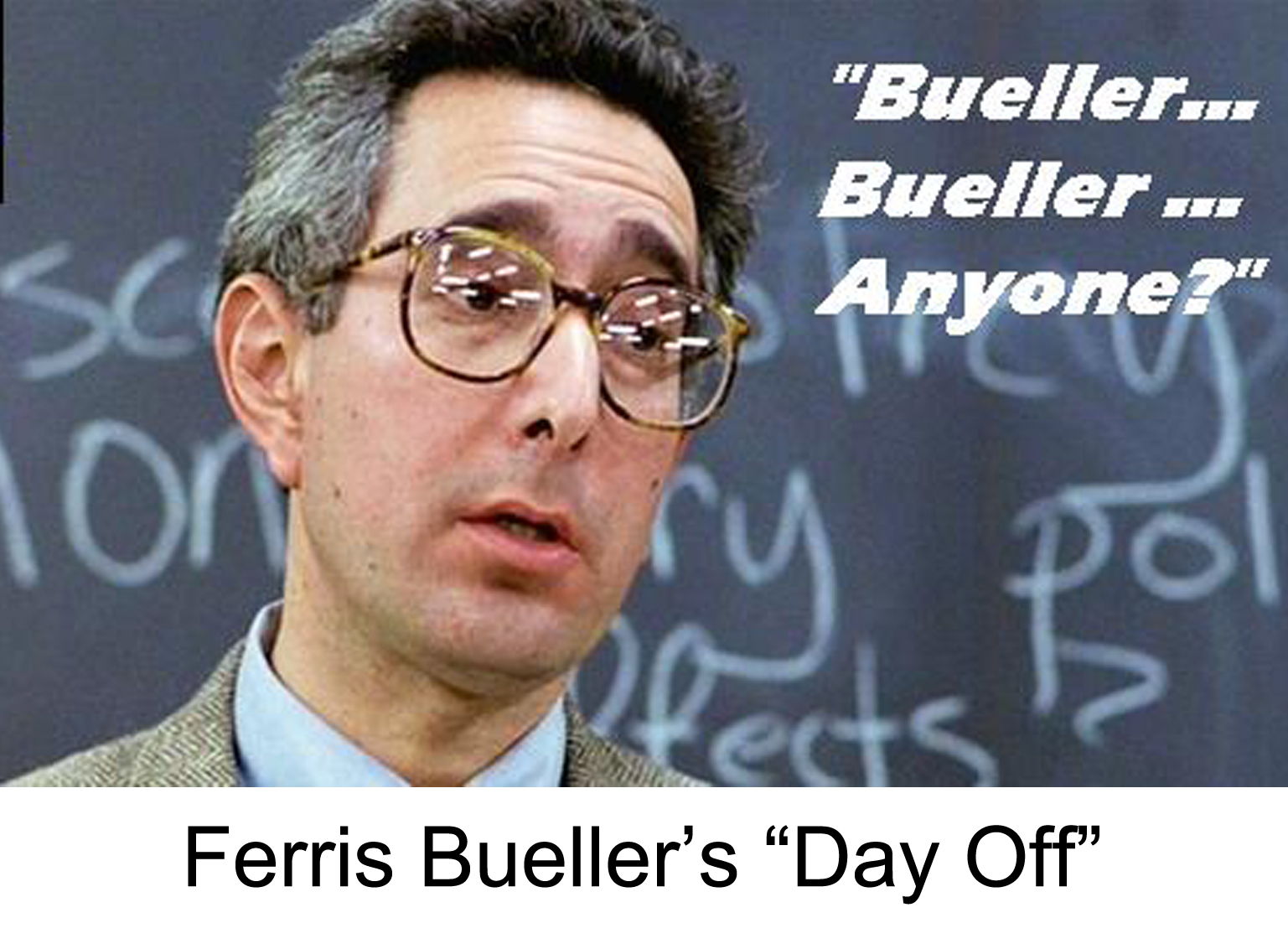
I’m very unsettled within myself.  Anyone else get that feeling like you are on the outs with the world and you are going to make a muck of someone’s day just because you are in it?  No?  Just me?  (Bueller?…)

It is true that my laptop has decided to stop connecting to icloud, and there has been no fix that will make it do so, which means everything I’ve stored in the cloud is only accessible on my phone.  Which is basically everything that was supposed to be on the hard drive.  This has been disconcerting in the extreme as all my writing and school-related documents and many other things I rely on every day are difficult to access.  I can’t even sign out to try to sign back in. (And before you send me tips, I’ve tried a lot: I’ve been on with three different Apple support people who were fairly useless.  I’ve rebuilt the iOS, tried making a new admin profile, even though all the profiles are already admin, tried having my account ‘forget’ my laptop, all to no effect.  I tried to get the icloud stuff off my phone onto an external hard drive but the phone wouldn’t connect to the drive so I couldn’t transfer the files.  I can’t even access icloud on any of the browsers on my laptop, and I’ve tried all four).  It is true that my laptop is very elderly in tech terms, but it still works for almost everything, so I’m disinclined to replace it.  

On the plus side, I’ve made some new progress on the novel, am reading lots of great stuff, have gotten some paid sewing alterations, and my neck and shoulder are still doing ok after the sturm und drang of the late summer.  Even after the car accident.  There is much to be grateful for.

We were at the monastery over Thanksgiving weekend, and I mentioned to one of the monks the situation with our car (we had rented a proper minivan for the long drive with the kids) and he just twinkled at me and said “The fast is full of temptations!”  It was a reminder to say the Jesus prayer when I feel like this and bring it all before God with trust and hope.  

Trust is a tricky thing, though.  If I think that trust means everything works as it should and life is smooth sailing, then when a tempest takes your ship, as it always does, it can feel like that trust is betrayed.  You end up shaking your fist at the sky and howling into the wind, when what you should be doing is lashing yourself to the wheel and giving over to the storm until it passes.  (Can you tell that Black Sails is still alive and well in my head?)  Rather, I should remember that trust means knowing that God works all things together for good.  And good is not necessarily what I think is good.

4) 1066 and all that

I’ve been reading a lot, as I said.  I discovered the Ruth Galloway series by Elly Griffiths.  A substacker I read recommended Griffiths’ latest book, The Frozen People, the first in a new detective series.  I enjoyed it enough that I decided to look into her first long-running series featuring an archeologist seconded to the Norfolk Police department.  I’m maybe five books into the twenty and enjoying them very much.  Consider it a kind of a middle-aged British Bones set in the fens.  

Starz’ Outlander prequel Blood of my Blood was an absolute treat from start to finish.  It was everything I hoped that Outlander could have stayed, and everything I loved about the first two seasons before they started messing with stuff for no good reason at all.  The disappointments of the later seasons of the show have even delayed my reading of Go Tell the Bees that I am Gone, the latest in the novels.  

I should state for the record that I still LOVE the books, as is well-documented here.  And I can hold the books separate from the show in my mind, but basically since season 4, I’ve been almost hate-watching it?  That’s not exactly right.  I do get sucked into the story, and I still think the show is well-written, high production value, great acting/casting, etc.  It’s more that because I know what happens in the books is not how it is playing out on screen makes for a kind of cognitive dissonance.  I know once I pick up the book I’ll be completely sucked in, though.

In any case, there are some great Easter eggs in Blood of my Blood, and, because I mostly didn’t know the story, I had no expectations about the show.  The casting is spectacular.  I’m eager for season 2.

I read a number of forgettable Cold War spy novels, plus a few non-fiction books about Cold War era espionage and am considering a novel on the topic.  (The Ipcress File is a fun watch).  I also read Harald Jahner’s excellent pair of books about Weimar Germany and the twenty or so years after WW2 ended, Vertigo and Aftermath, respectively.  I would call them paradigm shifting.  His writing style is novelistic and accessible, which my fuzzy perimenopausal brain appreciates.  Jahner’s books helped me understand a lot about European politics in the 20th century and also went a long way to fitting the pieces of the longer history puzzle together in my mind.

My other obsession remains England from 500 AD - 1066 AD.  After watching The Winter King, which is a King Arthur retelling in the time period in which the real Arthur is thought to have lived, I watched King and Conqueror, which is set in the first 10 months of 1066, ending with Hastings.  The latter show has some issues, namely messing with timelines, events, and some basic character mistakes; the actual events and personages are soap-opera worthy, so I’m unsure why they messed with it?  I did enjoy it, but I sort of had to turn off the historian part of my brain and let the show be the show and not actually what happened.  I am planning to read Ed West’s book on 1066 soon.


Anyway, the two shows formed bookends to the books and series I’ve read and watched in past years about the period: Vikings (through season three; it went off the rails by four), The Last Kingdom, which picks up roughly where Vikings leaves off, and Vikings: Valhalla, which takes place about 40 years after The Last Kingdom.  (Season one of Valhalla is just ok; I gave up one episode into season 2.  Michael Hirst’s touch was sorely missing).  The new Robin Hood on MGM+ picks up about 100 years after Hastings; it depicts it as a clash of Saxon vs. Norman invaders, which is interesting and timely after King and Conqueror.  There are some things I don’t love about the show, but I’ll stick with it for now.  (As an aside, I have the old BBC Robin Hood on while I’m sewing and it is a delightfully campy romp.  The costuming is hilariously bad, and the characters broadly drawn, but it is so light and enjoyable to rewatch.  Plus: Richard Armitage).  

I’m sorry The Winter King was canceled after one season; they were really hitting their stride and I was curious to see where it would go.  There were some issues with the storytellings, obviously, but it had high production value and the character development was great. (Fair warning, the bad guys are REALLY bad).  I’m planning to read Bernard Cornwell’s Warlord triology on which The Winter King is based.  And I want to revisit The Mists of Avalon, which I read many years ago and loved.  I’m still plugging away at the Corwell’s Saxon Chronicles, on which The Last Kingdom is based.  I think what I liked best about almost all the shows mentioned is that they take the religion of the characters seriously, and also deal with the conflicts between Christianity and paganism in the time fairly.  

5) Mythology

I also highly recommend The Return, which is the story of Odysseus’ return to Ithaca at the end of his journeys.  Ralph Fiennes and Juliette Binoche knock it out of the park, and Binoche especially is magnificent.  The last ten minutes of the film are Oscar-worthy and took my breath away.  Binoche says very little, but her face conveys everything.

Speaking of The Odyssey, one of the annual assessment prompts in 7th grade Humane Letters is: “The Odyssey is the only true story.”  (Humane Letters in Upper School is no joke, ya'll).  I have this poster that one of the Humane Letters teachers designed that says: “The hero must go down into Hades in order to get home.” Which I think covers it all.  

6) Fairy Tales

On my driving to and from school for various kid activities and pick ups, I’ve been catching up on Storytime For Grownups’ Summer Session.  This past summer she delved into fairy tales, and I’m completely captivated.  There is an interview early on in the summer with Boze Herringdon and he said something to the effect that fairy tales undergird all our stories to some degree, and, since they go back thousands of years in one form or another, without those tales, we cannot know who we are as a culture.  He noted that a lot of writing and screen-based storytelling in the past 10 years has gotten away from that and it is almost uniformly rubbish as a result.  It’s like trying to build a house over a canyon.  You cannot do it.  We’ve collectively forgotten our stories.  It has given me a lot to think about as I edit my manuscript and continue to shape the story.  I’m still trying to decide what “type” the story is: Cinderella, Beauty and the Beast, or a Bluebeard story.  Or something else all together.  There’s a symbolic underlayer there that is important, even if it isn’t visible.

7) Friends in Singapore?

I’ve noticed a large uptick in my stats the past few months, mostly from Singapore.  While I would be delighted to welcome new readers, I strongly suspect a data firm is training an AI on Google’s blogger content.  Several other bloggers have noted similar statistical findings, so I think I can be safe in saying that.  In which case: boo, go away! Please…?


Friday, May 10, 2024

Eh--Seavaiger, but then, Mr. Rochester

I hesitate to show this project because it was so frustrating to me and I don't love the end result. I may end up giving it to one of my girls or frogging it all together.  That's what I get for stash-busting. 


This is Kate Davies' Seavaiger pattern, and while the first release of it did not garner my enthusiasm, a second cropped sample convinced me to buy the pattern. Samples matter, people. I was trying to figure out how to use up a couple of stashed balls of Palette yarn that coordinated and decided to give this one a go.

Everything was fairly straight forward until the body divide.  You knit straight in the round for however many inches you want (I ended up with 7" for this cropped version and think that is about right; Kate's cropped one is 5" and the full length one is 11"), then you start shaping the dolman with increases on the sides.  After that you divide for front and back and that is where the trouble began.  I decided to slip the edge stitches to get a neater edge to cast on the sleeves, but that produced a fairly firm edge, particularly on the side that I was carrying the yarn color changes on.  Mistake #1.  

The pattern has you knit 5" then start short rows.  Mistake #2, although I should have caught this one at the time.  5" on each side gives you less than 10" circumference in the sleeve, and even if the dolman is close to your elbow, 10" is pretty small.  My biceps are less than 11" at the fullest now and the sleeves are almost too snug.  I ended up closer to 6" because I lost track of it, but even that is just this side of snug.  

Then are the short rows, of which you are supposed to do 15 each side (!) before the neckline.  I noticed many people complained the neckline was too tight and high, so I did this with some trepidation.  Mistake #3.  First attempt was ridiculous.  I tried reducing the number of short rows to 11 in back and 9 in front with some neck decreases, which helped slightly, but not nearly enough.  Attempt #3 was what I ended up with (I have what ended up working as a mod in my Ravelry notes, but the short version is knit 3 short rows, then start neck decreases along with short rows until you have no more stitches).  

Mistake #4 was with the sleeve cast on, as you simply cannot pick up and knit 72 stitches in 10-12" of space at this gauge.  I had approximately 52 rows to work with, and cast on 52 stitches.  I knit one row, then increased enough stitches to get to 74 and then worked the sleeve decreases every 8 rows until I got to 52, then knit another few inches before the ribbing.  

The sleeve joins ended up asymmetrical for some reason and the left sleeve join looks slightly odd as some of the stripes sort of end in no-man's land.  Not really sure how that happened since I did the short rows the same on both sides.  


I'm trying hard to reserve judgement because I know I'm not in a wonderful headspace right now. It is Bright Week and I'm still exhausted from Holy Week and Pascha. My dad restarted chemo at the beginning of Holy Week because his cancer has returned and my FIL has had a series of unending crises the past couple of weeks that are just stressful. Oh, and my husband's cousin died quite suddenly at the start of Holy Week. And the dryer died (but has been resurrected thanks to a good repairman plus an electrician friend at church).  And don't get me started on the raging teenage hormones in the house.  Times four. Never rains but floods, amiright?


On the plus side, we finally got a garden plot in our community garden after being on the wait list for YEARS and even lucked out with a double plot that has a mature strawberry patch and other perennials! 


It is 10'x20', so a goodly size.  I put in a bunch of mulch this week and it looks a lot better with most of the thistle and other weeds gone.  The irises and the rose bush are blooming and the two peonies are about to bloom.  The spring flowers were done by the time we got the plot, but I'm excited to have lots of daffodils for next year, as we all know my feelings about the dafs.


It needed a lot of weeding and other heavy work, but I'm thrilled with the space and the opportunity to experiment with growing food that needs full sun, as the back patio light situation isn't ideal.  


I'm on a deep dive down the rabbit hole with Toby Stephens' work so am working my way through Black Sails and thoroughly enjoying his Captain Flint.  The show is conceived as a kind of prequel to Treasure Island.  I have some complaints about the show more generally (way too much unnecessary swearing, particularly by female characters, among other things) but the writing and character development is great and the production values are superb.  


In other period work, Stephens' Mr. Rochester might just be my favorite; I had thought Michael Fassbender's was the definitive performance for me, but the 2006 BBC version is even better.  Private Lives is next in the queue.


I read Dune for the first time in April and enjoyed it, although I don't think I'll be reading the other books in the series. I've been working my way through the Saxon Chronicles by Bernard Cornwell for a few years; I finished book six (of 13) in early April and have the next one teed up on my nightstand. I'm currently working on Kairos, a translation of a German fiction book set in East Germany in the 1980s. It was long listed for an international prize and while the beginning was promising, I'm a bit bogged down in the middle. The author frustratingly doesn't use grammar conventions with dialogue and it is often hard to tell who is speaking. I also started A Little Life by Hanya Yanagihara, which is a tough read at times, but very compelling. I keep hoping that the filmed stage version with James Norton in the main role will be released for streaming.

Right then, that's me.  I should probably take a nap or something.

Tuesday, August 15, 2023

Reading Corner: Swamp Edition

Welp, we are in the home stretch of the summer, and I'm ready for school to start (although our fall activity schedule is a little more chaotic than I would like because Birdie was really set on being in the fall play at school and the boys are running cross country.  Oy).  Honestly, the summer has been okay.  The nasty hot/humid weather really only started last week; there were quite a few days this summer where I had windows open a lot of the day--that never happens!  Although I will say it has been a doozy since last week.  I guess the weather was saving it all until now.  

My kids and husband went to overnight church camp the first week in August and I had seven glorious days all to myself.  I read, watched a bunch of independent films, wrote a bit, and generally kept my own schedule for the first time in years.  It was a bit of a hard reentry when they returned--why do they need feeding so often?--but we'll get there again, I guess.  One possibly fruitful bit of that week was that I think I'm working my way around a writing project, although I'm not sure it will be anything yet.  Considering I thought perhaps I only had two books in me, it is nice to have the sense that there might be more to explore.  But we'll see.  It might fizzle once I figure out what it is I'm working with.  I've had enough false starts since finishing All This Without You to be cautious.

I said in my last post I've been reading a lot this year, and decided it might be time to write about some of it.  So, on to the reading stack!  

From the top down: The Rise and Triumph of the Modern Self by Carl Trueman; The Master and His Emissary by Iain McGilcrist; Feminism Against Progress by Mary Harrington; The Normal Heart by Larry Kramer; Clanlands Almanac by Sam Heughan and Graham McTavish (not pictured: Way Points by Sam Heughan); Lost in Wonder by Esther DeWaal; The Soviet Century by Karl Schlögel; Dominion by Tom Holland; Winters in the World by Eleanor Parker; The WEIRDest People in the World: How the West Became Psychologically Peculiar and Particularly Prosperous by Joseph Henrich; (not pictured) Solovyov and Larionov by Eugene Vodolazkin

There was also a trio of Cold War spy histories by Ben Macintyre on my Kindle; each book read like a novel and was thoroughly enjoyable.  Agent Sonya reminded me a lot of the film Red Joan; both stories cover similar histories over a similar time period, so that shouldn't have surprised me.  I started a fourth one, In the Enemy's House by Howard Blum but haven't been as gripped by it, even through their narrative styles are similar.  I tried to read A Gentleman in Moscow by Amor Towles (my second attempt!) but gave it up as a bad job about half way through.  I was bored out of my skull and the author was only at 1936!  I just couldn't see reading another 200 pages.  

Unrelated, but we got a lot of raspberries from my garden this year!

The Trueman, McGilcrist, Henrich, and Harrington books all covered similar ground from different perspectives, although I would say the Henrich book really bogged down on specialist material in a lot of places. The book could have been trimmed considerably for a general audience. McGilcrist is a paradigm shifter, and he recently published the two-volume follow up that is twice the length of the first.  My husband is reading that one now but I'm not sure I'm going to tackle it.  The first one was very meaty and good, but I'm not sure how much more I'd get out of the other two volumes.  We'll see.  There are lots of interviews with McGilcrist on his work on YouTube, so if you don't have time for an 800 page book, you can get the Cliffs Notes version there.  


I gave a lecture on Soviet communism to the seniors at my kids' school during the last week of school in June and revisited Yuri Slezkine to prepare for it, so between that and the nearly 900 page Schlögel, it's felt like a whole lotta USSR here the last few months.  I need to set that aside for a while, even if there is a great new Gary Saul Morson book that my husband loved.  It will still be there when I'm ready to tackle it. Tom Holland's Persian Fire was a birthday gift last month so I'm looking forward to reading that one.  Dominion was a great read.  I highly recommend this interview with Paul Kingsnorth if you are interested in the topic.  I read the book on the strength of that chat.

Boo wanted me to read Why We Drive aloud for his night time story this month, so it has been fun to revisit that book.  Matthew B. Crawford is such an amazing thinker and writer and a keen observer of the times we live in.  (He has a Substack now, although I don't have time to read much of it!) I've realized in the past months that I could spend all my time reading excellent Substack authors, but it doesn't feel like a good use of brain space or time.  I think differently through physical books and don't retain information as well when I read on a screen, so it is better for me to be mostly analog.  What writing I've done this month has been long hand as I find that a better way to start the process.

There were a few forgettable novels along the way as well as some fiction re-reads, but it has been a good reading season.  I've got some books on hold at the library that should keep me for the next bit.

Sunday, April 17, 2022

Rewind

I almost can't believe it is Palm Sunday already.  (We in the East are a week behind this year).  The kids and I have been passing around a respiratory infection during spring break, so it has been a low-key week for us.  Birdie's infection developed into pneumonia mid-week, so I'm keeping her home from church this morning.  We'll stream the service from our cathedral in DC so at least we get the flavor of the day.  I've missed a number of Sunday services this Lent because of my own or my kids' illness, but that is okay.  To everything a season.  I'm grateful to have streaming options for times like these.  


We also received most excellent news this past week: my dad's cancer is in remission! Thank God!! He still has a long way to complete healing and recovery, and he'll need to be checked every few months for a while, but we'll take it. That said, even after recovery, he won't be going back to work as chief pharmacist at the hospital again, so his semi-retirement of September turned rather abruptly into a full retirement when everything happened last October. So we'll see what God has in store for him in this next season and will trust in His provision.  Thanks to everyone who has prayed, given financial support, brought meals, etc.  It has been such a help and blessing.

A dear friend of our family is also going through cancer treatment at the moment and I decided to make her a lap quilt.  My dad used his birthday quilt so much when he was in the hospital and during his recovery at home that I thought it might be a useful thing for her.  I had bought a couple of charm packs from the Moda Songbook fabric line and made up a simple patchwork quilt with some small sashing around the edges.  The backing and binding was from the same line of fabric.  The hardest part was figuring out the best arrangement of blocks!

I found a walking foot that fit my Bernina and quilted in diagonals, which was fun and satisfying.  I found the whole process of this quilt quite fun, actually.  My only complaint is that the walking foot is really hard on needles, and I had to change mine several times during the quilting process, but the result was so even and nice that it was worth it.  I have several more patchwork lap quilts in mind for both my home and as a gift or two.   

I finished several books lately.  Kristin Lavransdatter has been on my nightstand for a year now, and I finally finished the beast.  Fittingly, I started it last Lent, and finished it at the end of this one.  The last 50 pages were really beautiful, and I'm glad I read it, but I don't think I'll be revisiting the story any time soon.  (I know, I know.  I'm a terrible person.  Hopefully we can still be friends?)


I finished Martin Malia's The Soviet Tragedy after poking through it for several months and found it a very good and informative read.  Malia gave me a different perspective on Khrushchev that I appreciate very much.   It's also interesting to integrate Malia's work with Slezkine's, as they approach the same material with quite different frames, but both have important contributions toward understanding the period.

From there, I re-read Sana Krasikov's The Patriots, which is about the American emigration to the USSR during the Great Depression.  I noticed in her notes that she relied on a monograph called The Forsaken for parts of the story, and decided to run that book down.  It was an extremely engaging and informative read, although parts of the story are hard to take in and some are just plain infuriating.  (If you've seen Mr. Jones, the unconscionable Walter Duranty makes more than one appearance in Tzouliadis' book).  After that, I wanted to read more Krasikov, so read her first book of short stories called One More Year.  Each chapter is about a different post-Soviet immigrant.  Even though the book tends toward black humor, it was an informative window into the post-Soviet experience.


Somewhere in there, I also read The Guernsey Literary and Potato Peel Pie Society and enjoyed it very much. I loved the epistolary format, and wanted to read something similar, and found Letters from Skye, by Jessica Brockmole, which I started last night. I can hardly put it down, and am enjoying it almost as much. I also decided to re-read Dead Souls, which is a hilarious romp through the 19th century Russian countryside. Gogol was a comic genius.

Finally, I've been reading Pride and Prejudice aloud to the girls at bedtime for the past month or so, and we finished it this week in a marathon read-aloud on Friday during lunchtime.  We watched the BBC version with Jennifer Ehle and Colin Firth over several viewings this past week while the boys were occupied with a different show.  I also want to show them the 2005 movie version because I like both for different reasons.  The BBC version is extremely faithful to the book, but there is something about the condensed 2005 version that just grows on you.  I happen to like Matthew McFayden very much, and enjoyed his take on Mr. Darcy.   

We just started Persuasion, and I look forward to showing them the film version with Sally Hawkins and Rupert Penry-Jones when we've finished the book.  So much Austen, so little time!  I feel as though I'm getting a great books education right alongside my kids and it is fabulous.  

Friday, May 28, 2021

Spring Evendoon


This is possibly an odd post for the end of May, but I wanted to show my completed Spring Evendoon before the weather makes it completely ridiculous to write about a wool sweater.  I finished it on May 13 and blocked it and photographed it the next day, when it was still chilly enough in the morning to get away with it.  The temps are supposed to drop to the 50s over the weekend (hooray!) so I might even get to wear it.  (Although my Cypress sweater is on the block now, so I might wear that instead!)

So, the Evendoon.  I cast this on immediately after finishing the Lilias Day in part because I was so disappointed that the Lilias wasn't going to work for me and I loved the palette so much.  (The friend I sent the sweater to is delighted with it).  This is a basic raglan knit, but the striping pattern keeps you on your toes, particularly during the raglan increases, as you have to keep track of two things at once.  It was also a LOT of ends to weave in as I knitted the sleeves flat and seamed (which I'm never doing again as I finally figured out a way of knitting small in the round that doesn't make me want to claw my eyes out).


I decided to stick to the same (stashed) palette and go for a striped version using Kate Davies Evendoon pattern.  (Her palette on the multi-stripe version is very similiar to mine)  This was another case of a sweater pattern I didn't notice when it came out but found very pleasing in a different colorway.  I originally combined the same two Jamieson and Smith yarns for the aqua stripe as I did on the Lilias Day, but it was coming out closer to worsted gauge, so I decided better too light than too heavy and tinked back to use a single strand of the J&S which does bloom nicely with wet blocking.  I like the bright palette very much!


I again went with the 3rd size, even though I usually make a 2 in Kate's sizing, because I wanted slightly more ease and was concerned about the fit.  The fit is spot on!  I did have to change the bottom slightly from the sample, as the extra two stripes made the body too long for my short torso, and I didn't like how the Jamieson and Smith knitted up in the ribbing on the bottom or neckline (I was also playing yarn chicken with the J&S, and wanted to be able to get the sleeves out).  I like how the cuffs, hem, and neckband all match and keep the stripe pattern. 


In book news, I've been reading Matthieu Pageau's book called The Language of Creation and having my mind generally blown about all the symbolism and fractal connections in the stories of the Bible.  More than that, it is a framework for interpreting and understanding the world.  (Jonathan Pageau said that when he was editing the book for his brother, every time he read the manuscript, he would get to about page 100 and start having seizures about the amazing insights and connections.  Page 100 nothing; I was having seizures on about page five.  Needless to say, it is not a book to rush through, but rather should be taken in small bites.) 


It all goes back to the garden, or as Paul Kingsnorth memorably put it: "we are all still trying to eat the apple."  (He's been killing it on his substack this month--it is well worth the subscription!  "Blanched Sun, Blinded Man" is a great introductory essay about the enchantment of the Machine we all find ourselves in.  I'm eager to read the rest of this series as it comes out).  Around the same time that I started Matthieu's book, I watched the largely panned film Noah, and found it to be much better than the critics said.  It fits well with the symbolic structure that the Pageau brothers talk about, and pulls from lots of traditional sources including the Apocrypha for additional details not included in the Pentateuch.

This week, I started reading a book I got for my birthday last summer called 1983: Reagan, Andropov, and a World on the Brink.  It is a book about how close we came to nuclear annihilation in 1983 because of a number of factors that collided that year.  I'm completely fascinated.  What I like about the author's approach is that he is clear-eyed about both sides of the story, painting neither a flattering nor unflattering picture of either Reagan or Andropov, and giving equal time to the concerns of both sides.  

I think it is easy for people of my generation or a bit older to lionize Reagan because of the perception of stability that he fostered--or at least a kind of clean polarity--but with time and distance comes some wisdom about the ways in which Reagan actually contributed rather heavily to the sort of political discourse in which we now find ourselves, and the instability of international relations more generally.  One wonders if a president with a longer attention span and better impulse control would have been a better choice at that time in history. 


A quirky documentary called The Man Who Saved the World came my way this week as well, and I highly recommend it.  It is about a little-known incident in the USSR where a Soviet colonel averted a major nuclear war in the late summer of 1983.  

(Incidentally, the film glosses over the disaster of the Korean airliner at the beginning of the film, with lots of heart-breaking footage of the aftermath, but the 1983 book gives a great deal more context and information about what happened, and while it was a terrible tragedy, there are a great many questionable things on the part of the captain and crew that led to that point.  Moral of the story: stay in the captain's seat and man your radio).


In between seizures over great stuff from Jonathan Pageau and his brother Matthieu, I am also rewatching The Americans, which is set in the early 1980s, and am drawn in anew, with different eyes to see this time.  

My brain is cookin'.  Hold on to your hats!

Tuesday, April 20, 2021

Talking Tuesday: Kristin Lavransdatter


As a kind of Lenten penance project,  I decided I was going to make my way through Kristin Lavransdatter.  There are many of my acquaintance who love this triology for its spiritual depth and beauty; I thought surely I would love it too.  I tried reading it several years ago, but gave up in the first chapter.  It was so slow, so overfull of description of 14th century Norway.  

This Lent, after reading another glowing recommendation in a Substack newsletter, I thought, I must read this book, even if it is a slog.  The first couple of chapters were again exceedingly slow.  Kristin is a seven-year-old child at the beginning, and it was difficult to get into her as a character.  But Sigrid Undset didn't win the Nobel Prize for Literature for nothing.  She carefully weaves in the story of Kristin's parents, Lavrans and Ragnfrid, while we wait for Kristin to mature.  I admit, I was more captivated by their story (and continue to be, if I'm honest).

I'm nearly to the end of Book 2: The Wife, and after 650 densely packed pages, we hit gold.  There are some glimmers at the end of Book 1: The Wreath, as well as threaded through The Wife, mostly from the story of Lavrans and his wife.  Lavrans is an extremely pious and ascetic man, a good man, who provides well for his family and household, is an upstanding member of the community.  He keeps all the fasts of the church year (both in food and marital relations) and drinks only with joy, never sorrow.  Lavrans is oblivious to to his wife's emotional and sensual needs until they have been married 20 years and he learns more about her.  


Lavrans pulls his wife aside at the end of Book 1 to talk to her during the celebration of Kristin's wedding.  Things Are Revealed that shake Lavrans to his core, although he does not show this to his wife, who thinks her revelations mean nothing to him, that she is nothing to him.  She continues to shrivel inside, although she does not show this to anyone.  It is only when Lavrans is an old man, approaching the end, that he and Ragnfrid reach real understanding, emotional connection, and rapprochement.  It is a beautiful thing to read, but also bittersweet, since it came so late in their lives together.  

Kristin, on the other hand, is a train wreck of epic proportions.  It is hard to read all the poor decisions she makes in her life that put her where she is by the end of Book 2, but at the same time, the spiritual revelation she has then is a glorious and beautiful thing.  But again, it comes so late.  


The recurring theme (to my mind at least) is how much we can hurt those closest to us by being willfully blind to our own faults and failings.  It is entirely possible to erect a Potemkin village of a life that shatters in the least wind.  We have a responsibility to the world more generally, but close to home more specifically, to soften our hearts and see our own faults and work to overcome them (and in a Christian context, we do this with God's help and the sacraments He gave us, including confession and repentance).  

O Lord and Master of my life, take from me the spirit of sloth, despondency, lust for power and idle talk.
But grant unto me, Thy servant, a spirit of purity, humility, patience and love.
Yea, O Lord and King, grant me to see my own faults and not to condemn my brother. 
For blessed art Thou unto the ages of ages. Amen.
~The Prayer of St. Ephrem the Syrian, prayed daily during Orthodox Lent.

I suppose another theme is that it is never too late to try to put things right and start again.  Lavrans goes to his grave having made peace with the world and his wife.  Kristin has seven sons and is married a long time before she really understands how she has wronged her husband, but her revelation brings her to her knees.  I'm curious to see where this new understanding will take her in Book 3: The Cross, as she becomes an old woman.